You bought the glycolic acid because everyone said it fixes everything. Now your skin feels tight and looks shiny, and the breakouts remain. Most people have tried two or three exfoliants by the time they find us. The problem was never effort. It was a mismatch.
|
QUICK ANSWER Glycolic acid (an AHA) dissolves in water and works on the skin's surface, which suits dull, dry, or sun-damaged skin. Salicylic acid (a BHA) dissolves in oil and clears congestion inside the pore, which suits oily and acne-prone skin. If breakouts are your main concern, start with salicylic acid. |
How do glycolic acid and salicylic acid work differently?
What does glycolic acid do to skin?
Glycolic acid is the smallest AHA and dissolves in water. It loosens the bonds between dead cells on the surface, which smooths texture and brightens dullness. [5, 6]
What does salicylic acid do to skin?
Salicylic acid dissolves in oil, so it moves through sebum into the follicle and disrupts the cell junctions holding a clog together. [2] A surface acid can't reach a plug sitting inside the pore.
|
|
Glycolic acid (AHA) |
Salicylic acid (BHA) |
|
Dissolves in |
Water |
Oil |
|
Works |
On the surface |
Surface and inside the pore |
|
Best for |
Dullness, texture, fine lines |
Oily skin, blackheads, breakouts |
|
Start at |
2–3 nights a week |
Every other night |

Is glycolic acid or salicylic acid better for acne?
Neither acid is stronger. That's the belief we correct most often. They work at different depths, and acne starts deeper than the surface. In one split-face trial, in-clinic peels of 30% glycolic and 30% salicylic acid cleared mild to moderate acne about equally well. The salicylic side held its results longer and caused fewer side effects. [1] The study was small; we read it as direction, not a verdict.
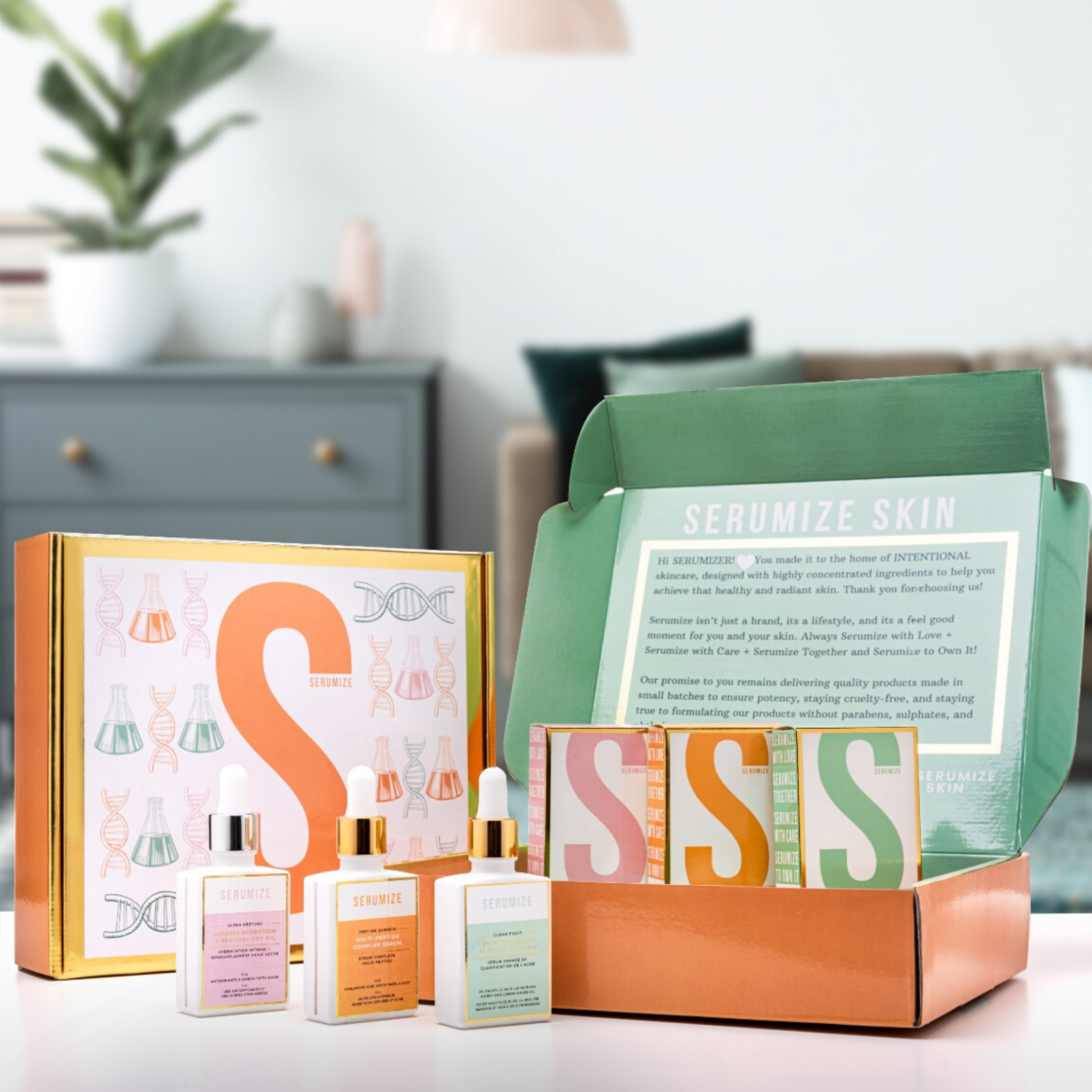
We formulated Clear Fight Serum around a BHA for that reason. It works inside the pore, where breakouts begin, so it treats oily, acne-prone skin at the source rather than polishing it on top. Glycolic acid still suits dullness and fine lines.
How often should you use each acid?
Start low. Glycolic acid two or three nights a week; salicylic acid every other night, moving to daily only if skin stays calm. Over-exfoliation shows up as red, irritated skin. [4] Wear SPF with either acid. In FDA-run testing, four weeks of AHA use raised sensitivity to UV-induced redness by 18 percent, and it settled within a week of stopping. [3]
What happens if you use the wrong one?
Oily skin on glycolic acid alone looks polished while the pores stay blocked. Dry or reactive skin on daily salicylic acid turns tight, flaky, and sore. Both are fixable. Stop, simplify, moisturize, then restart slower.

Build A Routine Around Your Skin
You came here with breakouts, not a chemistry question. If congestion is the problem, a BHA is where we'd begin. See the Clear Fight Serum formula or build a routine for your skin type.
Sources
1. Kessler E, Flanagan K, Chia C, Rogers C, Glaser DA. Comparison of alpha- and beta-hydroxy acid chemical peels in the treatment of mild to moderately severe facial acne vulgaris. Dermatologic Surgery. 2008;34(1):45–50. doi:10.1111/j.1524-4725.2007.34007.x
2. Arif T. Salicylic acid as a peeling agent: a comprehensive review. Clinical, Cosmetic and Investigational Dermatology. 2015;8:455–461. doi:10.2147/CCID.S84765
3. U.S. Food and Drug Administration. Alpha Hydroxy Acids (cosmetics ingredient information and AHA sun-sensitivity studies). fda.gov/cosmetics/ingredients/alpha-hydroxy-acids
4. American Academy of Dermatology Association. How to safely exfoliate at home. aad.org/public/everyday-care/skin-care-secrets/routine/safely-exfoliate-at-home
5. Kornhauser A, Coelho SG, Hearing VJ. Applications of hydroxy acids: classification, mechanisms, and photoactivity. Clinical, Cosmetic and Investigational Dermatology. 2010;3:135–142.
6. Babilas P, Knie U, Abels C. Cosmetic and dermatologic use of alpha hydroxy acids. Journal der Deutschen Dermatologischen Gesellschaft. 2012;10(7):488–491.