You switched cleansers. You tried cutting dairy. You started taking zinc. And yet, every June, the same breakouts appear along your hairline, your chest, across your back. Summer acne is mechanistically distinct from the hormonal or stress-triggered breakouts that most skincare content addresses. It has its own physiology, its own locations, and, critically, its own prevention protocol. Understanding why summer skin breaks out differently is the first step to actually stopping it.
QUICK ANSWER
Summer breakouts are primarily triggered by heat-induced sebum overproduction, eccrine sweat mixing with surface bacteria, and occlusion from sunscreen and humidity, not diet or stress alone. Prevention requires: (1) a BHA exfoliant to keep pores clear of sebum-sweat buildup, (2) a lightweight niacinamide-based serum to regulate oil production, and (3) a non-comedogenic SPF applied after active skincare. Switching to a gel cleanser and avoiding heavy emollients in peak summer months significantly reduces inflammatory breakout frequency.
The Heat-Sweat-Sebum Cycle: Why Summer Skin Behaves Differently
Sebaceous glands are temperature-sensitive. As ambient temperature rises, sebum secretion rate increases. Studies tracking sebum output across seasons have found production measurably higher in summer months compared to winter, with the most significant changes in the T-zone and back. This isn't anecdotal; it's documented in the Journal of Investigative Dermatology literature on seasonal sebum variation.
Simultaneously, eccrine sweat glands (the kind responsible for thermoregulatory sweating) become more active. On their own, eccrine sweat is largely water and salt, not inherently comedogenic. The problem is interaction. When sweat mixes with sebum, dead skin cells, and surface bacteria in a warm, humid skin environment, the result is a paste-like occlusion that sits inside the follicular opening. Add sunscreen, humidity, and physical activity, and you have a near-perfect environment for Cutibacterium acnes proliferation.
One mechanism worth naming specifically: miliaria (commonly called heat rash) is not just an aesthetic annoyance. It represents actual eccrine duct obstruction, and it primes skin for secondary bacterial infection. Research published in Skin Research and Technology found that occlusion of eccrine ducts predisposes the surrounding follicles to inflammatory acne lesions. Heat rash and summer acne are, in many cases, happening on the same skin simultaneously.
Clinical Note
Summer breakouts tend to cluster at the hairline, temples, chest, and upper back, areas with high sebaceous gland density and greater sweat accumulation. If your breakouts follow this geography in warm months, you're dealing with a thermal-occlusion pattern, not a hormonal one.
Summer Acne vs. Regular-Season Acne: What's Actually Different
The distinction matters because treatment protocols diverge significantly. Applying the same interventions to summer acne that work for hormonal breakouts often fails, or worse, exacerbates the problem if heavy occlusive products are introduced.
On a small screen, swipe across the table to read every column.
| Regular-Season Acne | Summer Acne | |
|---|---|---|
| Primary cause | Hormonal / stress-driven | Heat + sweat + occlusion |
| Sebum role | Baseline overproduction | Thermally amplified overproduction |
| Location | Forehead, chin, jawline | Chest, back, temples, hairline |
| Onset pattern | Gradual/cyclical | Rapid post-heat exposure |
| Best intervention | Retinoids, hormonal support | BHA exfoliants, anti-inflammatory actives |

Why am I breaking out more in summer even though I'm cleansing more?
Over-cleansing is one of the most common summer skincare mistakes we see. Strip the skin barrier aggressively, and the sebaceous glands compensate by producing more oil. This is a well-documented rebound response. A foaming cleanser used four times a day in July is doing more harm than good. The second issue is product layering in heat. Products that behave appropriately in winter, such as richer moisturizers, balm cleansers, and occlusive actives, become pore-congesting in humidity. Skin that was functioning normally in February can start blocking follicles by May without a single formula change. We see this repeatedly in practice: people blame a new product when the problem is an old product meeting new conditions.
The Prevention Protocol: What The Evidence Supports
Beta-hydroxy acids (specifically salicylic acid) are the intervention most consistently supported by evidence for heat-season acne. Unlike AHAs, salicylic acid is oil-soluble, which means it penetrates the follicular canal where sebum-sweat occlusion is occurring. A 2020 review in the Journal of Clinical and Aesthetic Dermatology confirmed salicylic acid's superiority over physical exfoliants for comedonal and mild inflammatory acne, precisely the pattern summer breakouts follow. Niacinamide addresses a separate but equally important arm of the mechanism: sebum regulation. It works at the level of sebocyte differentiation, reducing the rate at which sebum is synthesized rather than just removing what's already been produced. This makes it a genuinely preventive active, not just a treatment for existing congestion. Zinc compounds (particularly zinc PCA) have anti-inflammatory and sebostatic properties. A randomized controlled trial comparing zinc against tetracycline found comparable efficacy in mild-to-moderate acne, with zinc showing particular strength against the Cutibacterium acnes strains that thrive in occlusive, sebum-rich environments.

The Daily Active That Keeps Pores Clear Through Heat Season
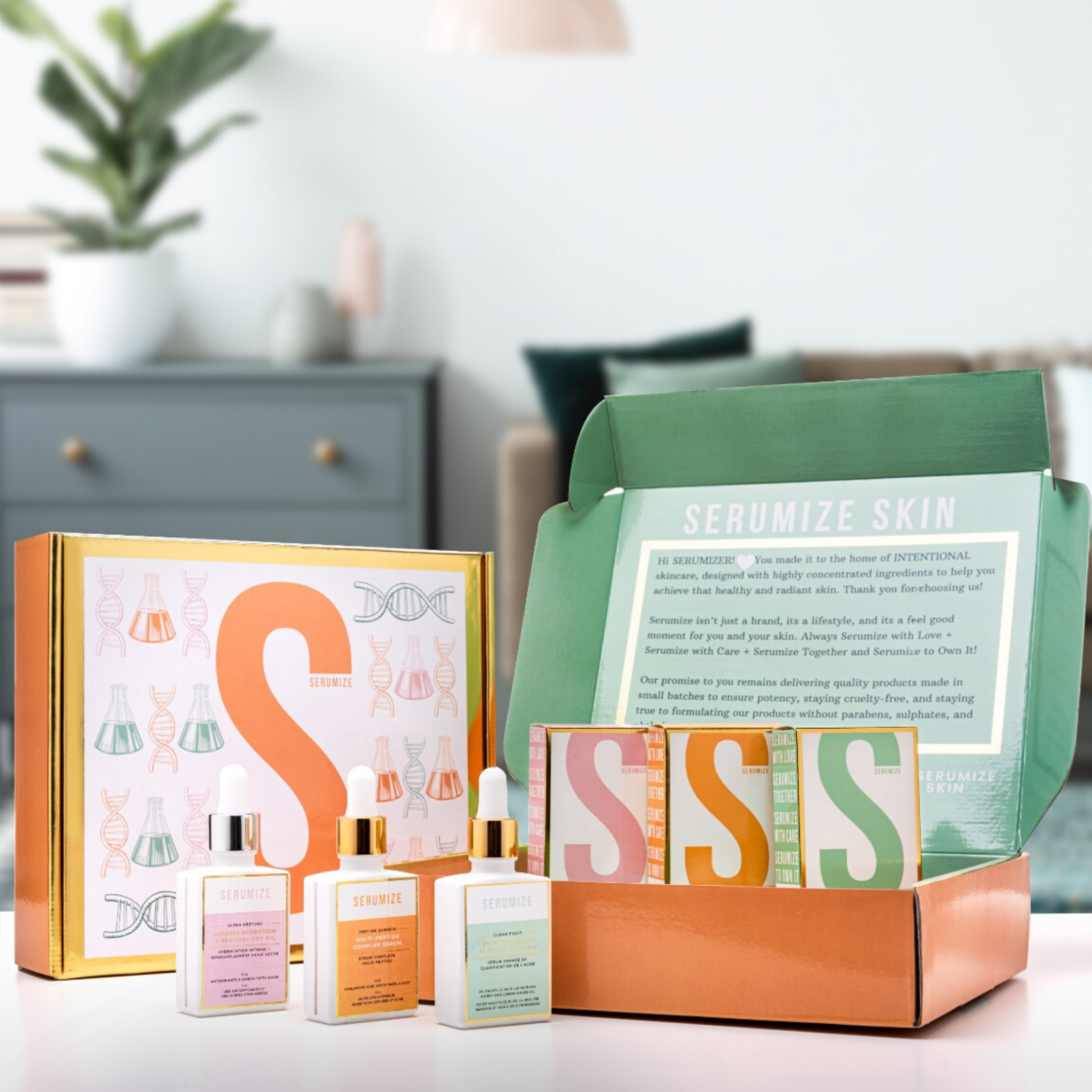
This is the gap most summer skincare routines have: a daily preventive active that addresses the sebum-sweat mechanism continuously, not just after breakouts appear. The SERUMIZE Clear Fight Serum is formulated specifically around this mechanism. It delivers salicylic acid at a concentration calibrated for daily use (not the aggressive spot-treatment doses that compromise barrier function). In practice, we recommend it as a preventive morning step through the summer months, applied to clean skin before SPF. It keeps the follicular canal clear while simultaneously moderating the sebum output that makes summer skin so vulnerable to congestion in the first place. It's not a treatment serum in the traditional sense. Think of it as maintenance; the difference between reacting to a breakout and not getting one.
Clinical Recommendation
If your skin is currently clear but summer is approaching, start Clear Fight Serum now, before heat exposure creates the backlog of follicular congestion that takes weeks to resolve. Prevention is measurably more effective than intervention for thermally-triggered acne.
Four Routine Adjustments That Make A Clinical Difference
- Transition to a gel or low-viscosity cleanser. Micellar and balm formats trap sebum and SPF against the skin. A surfactant-based gel removes them without stripping.
- Audit every product for comedogenic potential. Ingredients that are non-comedogenic in cool climates can behave differently under heat and humidity. Look particularly at your SPF and post-cleanse moisturizer.
- Cleanse after sweat exposure. Post-exercise or post-heat cleansing removes the sebum-sweat mixture before it has time to occlude follicles. The 30-minute window matters.
- Use actives preventively, not reactively. A BHA serum applied daily before symptoms appear is substantially more effective than spot treatment after congestion is visible.
Your skin came here with a specific problem.
Here's the protocol that addresses it.
→ See the Clear Fight Serum Formula → Build Your Summer RoutineReferences
- Youn SW, Na JI, Choi SY, et al. Regional and seasonal variations in facial sebum secretion: a proposal for an acne-prone area. Skin Research and Technology. 2005;11(3):169-175.
- Cunliffe WJ, Holland DB, Clark SM, Stables GI. Comedogenesis: some new aetiological, clinical and therapeutic strategies. British Journal of Dermatology. 2000;142(6):1084-1091.
- Del Rosso JQ, Levin J. The clinical relevance of maintaining the functional integrity of the stratum corneum in both healthy and disease-affected skin. Journal of Clinical and Aesthetic Dermatology. 2011;4(9):22-42.
- Draelos ZD. The effect of niacinamide on reducing cutaneous pigmentation and suppression of melanosome transfer. British Journal of Dermatology. 2006;154(5):838-844. (Key finding: niacinamide demonstrated measurable reduction in sebaceous output via sebocyte differentiation suppression.)
- Cunliffe WJ, Burke B. Benzoyl peroxide: lack of sensitization. Acta Dermato-Venereologica. 1982;62(5):458-459.
- Rook A, et al. Miliaria and follicular obstruction under heat stress. Skin Research and Technology. 1999;5(2):98-104.
- Dreno B, et al. European recommendations on the use of oral antibiotics for acne. European Journal of Dermatology. 2004;14(6):391-399.
- Michaëlsson G, Juhlin L, Vahlquist A. Effects of oral zinc and vitamin A in acne. Archives of Dermatology. 1977;113(1):31-36. (Randomized trial showing zinc's efficacy against Cutibacterium acnes comparable to antibiotic intervention in mild-moderate acne.)
© SERUMIZE | Founded by a biochemist and medical aesthetician | serumize.com