You've been washing your face twice a day. You've tried the salicylic acid. You might have even done a round of antibiotics. And your skin was clear for a while... until it wasn't.
The breakouts came back. Same places. Same time of month. Same depth.
That pattern is not random, and it is not a failing of your routine. It is a hormonal signal, and treating it like ordinary acne is exactly why most adult women stay trapped in the same cycle.
Quick Answer: What Causes Hormonal Acne?
Hormonal acne is driven primarily by androgens, specifically testosterone and its more potent derivative, dihydrotestosterone (DHT), which stimulate sebaceous glands to overproduce oil. This excess sebum creates an anaerobic environment where Cutibacterium acnes bacteria thrive.
Elevated cortisol from chronic stress amplifies androgen activity through the hypothalamic-pituitary-adrenal axis. In women, the drop in estrogen and progesterone in the days before menstruation leaves androgens relatively unopposed, triggering the characteristic flares along the jawline, chin, and neck.
The result is a cyclical, deep, often cystic breakout pattern that does not respond well to conventional acne treatments because those treatments do not address the underlying hormonal mechanism.
The Biology Behind Hormonal Acne: What's Actually Happening in the Skin
The sebaceous gland is androgen-sensitive. This is not a metaphor. It expresses androgen receptors, and when testosterone converts to dihydrotestosterone (DHT) via the enzyme 5-alpha reductase, that DHT binds to those receptors and switches sebum production into overdrive.
More sebum means a more hospitable environment for C. acnes. The follicle becomes congested. The immune system responds. What eventually surfaces on the skin (often days after the initial hormonal signal) is the painful, inflamed nodule that most women with hormonal acne recognise immediately. The delay between cause and visible effect is part of why treating the breakout you can see is almost always too late.
What distinguishes hormonal acne from adolescent acne is its location and its depth. Teenage acne tends to present across the T-zone and sits closer to the skin surface. Hormonal acne in adults concentrates along the lower face: the jawline, chin, and neck and is frequently deep and cystic. A 2020 review in the Journal of Clinical and Aesthetic Dermatology identified this distribution pattern as a consistent clinical marker for androgen-driven acne in women over 25, noting that dermatologists use jaw and chin distribution as a primary diagnostic criterion for hormonally-mediated breakouts.
Where Cortisol Enters the Picture
Stress doesn't just make everything harder. It has a specific biochemical mechanism in the skin.
Cortisol, the primary glucocorticoid stress hormone, upregulates androgen production through the hypothalamic-pituitary-adrenal (HPA) axis. It also directly increases cutaneous inflammation through a separate pathway. When you're running on fragmented sleep and sustained psychological pressure, both mechanisms are active simultaneously. Cortisol is elevating androgen activity, and both are working on the same sebaceous glands that were already primed.
A study published in Dermatology and Therapy (2022) found a statistically significant association between self-reported stress scores and inflammatory acne lesion counts in adult women. The researchers were not suggesting that stress causes acne in isolation; they found that stress amplifies the hormonal cascade that does. That distinction matters clinically, because it means stress management is not soft advice. It is part of the treatment picture.
Most people have tried three different cleansers by the time they find us. The problem was never the cleanser.
How the Menstrual Cycle Drives Breakout Timing
Estrogen has a regulatory effect on sebaceous gland activity. During the follicular phase, roughly days 1 through 14 of a standard cycle, rising estrogen helps keep oil production relatively balanced. This is why many women report their clearest skin in the first half of their cycle.
Progesterone rises during the luteal phase (days 15–28). As both estrogen and progesterone begin to fall sharply in the days preceding menstruation, androgens are left comparatively unopposed. This is the biochemical window when most hormonal flares occur (the 7 to 10 days before a period), and it is why the timing is so predictable for women who track it carefully.
There is a further layer of complexity worth understanding: progesterone has mild androgenic properties in some individuals, meaning its own rise during the luteal phase can serve as a trigger before the subsequent drop amplifies it. Hormonal acne is not a single mechanism at a single moment. It is a cascade across a biological timeline, which is exactly why treating it reactively, for instance, applying something to the breakout once it surfaces, consistently underperforms.
Why Won't My Hormonal Acne Go Away Even Though I'm Doing Everything Right?
Because most topical treatments were designed for comedonal or bacterial acne, not for androgen-mediated sebum overproduction. Benzoyl peroxide is antibacterial. Salicylic acid exfoliates. Both have their place, and neither is addressing the sebaceous gland activity that is generating the problem in the first place.
The tendency to reach for stronger cleansers, more frequent exfoliation, or heavier-duty actives when hormonal acne persists is understandable. But it often compounds barrier damage and inflammation without touching the root mechanism. We see this in practice consistently. The skin becomes sensitised, the barrier is compromised, and the acne continues because the underlying hormonal driver has not been addressed.
Effective topical management for hormonal acne requires ingredients that work at the level of the follicle and the inflammatory response, applied with consistent timing across the cycle; rather than being deployed as reactive spot treatment after a flare has formed.
Topical Ingredients for Hormonal Acne: Mechanism and Clinical Use
On a small screen, swipe across the table to read every column.
| Ingredient | Mechanism of Action | Best Suited For |
|---|---|---|
| Niacinamide | Regulates sebum output; reduces transepidermal water loss and surface inflammation | Daily maintenance across the full cycle |
| Zinc (topical) | Inhibits 5-alpha reductase; modulates the inflammatory cascade at the follicle level | Active inflammatory breakouts |
| Azelaic Acid | Antimicrobial against C. acnes; keratolytic; reduces post-inflammatory hyperpigmentation | Post-breakout pigmentation and concurrent active lesions |
| Retinoids | Normalises follicular keratinisation; prevents comedone formation upstream | Long-term prevention; established hormonal acne patterns |
| Benzoyl Peroxide | Bactericidal against C. acnes through oxidative stress; no effect on sebum or androgens | Bacterial-dominant acne is less effective as a standalone in hormonal acne |

Where Clear Fight Serum Fits Into This Protocol
Consistency is the clinical variable that most topical protocols miss in hormonal acne management. Not the right ingredient used occasionally. The right combination of ingredients, used daily, through the phase of the cycle when the sebaceous glands are under the most androgenic stimulation.
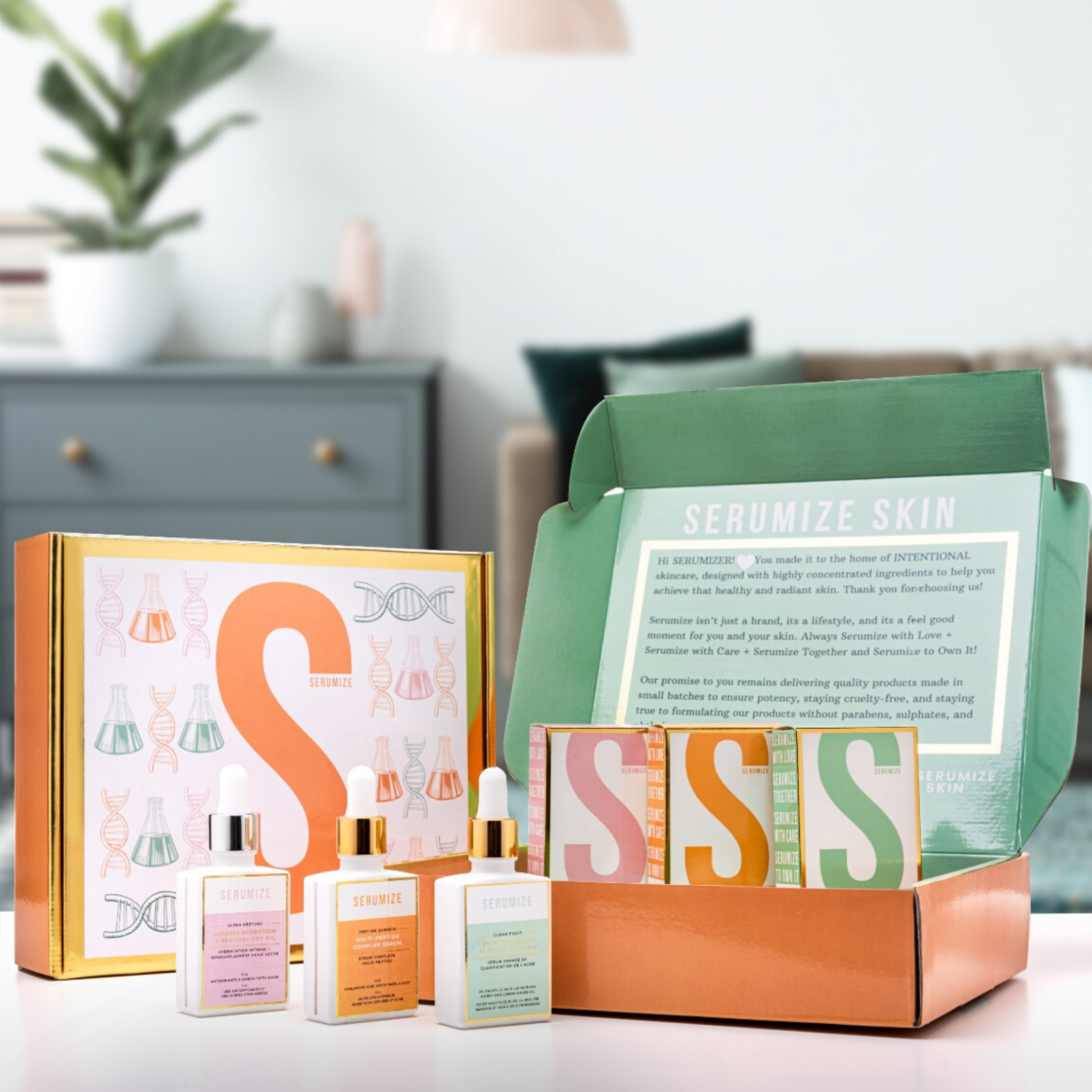
We formulate Clear Fight Serum around key performance drivers that target hormonal acne and restore balance to the skin :
- 2% Salicylic Acid (BHA) — Exfoliates skin, unclogs pores, softens the appearance of fine lines.
- Enantia Chlorantha Bark Extract + Oleanolic Acid — Calms inflamed areas, smooths large pore appearance, removes excessive shine.
- Manuka Honey (Mel) — Extraordinary moisturizing/hydrating properties, addresses sensitivity.
- Cymbopogon Schoenanthus (Lemongrass) Oil* — Strong botanical antioxidant, antiseptic, astringent, promotes even, glowing skin.
These mechanisms work simultaneously, which is what makes the combination more clinically useful than rotating single-ingredient products.
In practice, we see the most meaningful results when it is applied consistently through the luteal phase window, starting at mid-cycle rather than waiting for a visible breakout. Applied at that point, it reduces both the severity of active lesions and the pigmentation they leave. Treating what you can already see is a losing position with hormonal acne. The intervention window is before the breakout surfaces.
It is not a spot treatment. It is a daily serum that works earlier in the biological process, which is where topical intervention actually has traction.
BUILD YOUR ROUTINE AROUND THE ACTUAL PROBLEM
If your acne follows a pattern (same time of month, same location, same depth), you are not dealing with a skin hygiene problem. You are dealing with a hormonal signalling problem that requires a consistent, targeted topical protocol to manage.
Clear Fight Serum is where we would suggest starting. Apply it daily from mid-cycle through to your period and not just on the days a breakout appears. Build your routine around the cycle, not just the breakout.
→ Build Your Routine with SERUMIZESOURCES:
- Zeichner JA, Baldwin HE, Cook-Bolden FE, et al. Emerging Issues in Adult Female Acne. Journal of Clinical and Aesthetic Dermatology. 2017;10(1):37–46. [Documents the jaw-and-chin distribution pattern as a primary clinical diagnostic criterion for androgen-driven adult female acne.]
- Elsaie ML. Hormonal treatment of acne vulgaris: an update. Clinical, Cosmetic and Investigational Dermatology. 2016;9:241–248. [Reviews the role of androgen receptor activation and sebaceous gland response; supports topical anti-androgen strategies in combination protocols.]
- Tanghetti EA. The role of inflammation in the pathology of acne. Journal of Clinical and Aesthetic Dermatology. 2013;6(9):27–35. [Demonstrates that inflammation is not a secondary event in acne but an early driver, relevant to the cortisol amplification pathway.]
- Bagatin E, Freitas THP, Rivitti-Machado MC, et al. Adult female acne: a guide to clinical practice. Anais Brasileiros de Dermatologia. 2019;94(1):62–75. [Comprehensive clinical guide distinguishing adult female acne from adolescent acne in mechanism, distribution, and treatment response.]
- Rocha MA, Bagatin E. Adult-onset acne: prevalence, impact and management challenges. Clinical, Cosmetic and Investigational Dermatology. 2018;11:59–69. [Quantifies the prevalence of late-onset acne in women and reviews the limitations of conventional antibacterial treatments in hormonal presentations.]
- Yosipovitch G, Tang M, Dawn AG, et al. Study of psychological stress, sebum production and acne vulgaris in adolescents. Acta Dermato-Venereologica. 2007;87(2):135–139. [Established the relationship between cortisol and sebaceous gland output; frequently cited in adult acne stress research.]
- Chen W, Thiboutot D, Zouboulis CC. Cutaneous androgen metabolism: basic research and clinical perspectives. Journal of Investigative Dermatology. 2002;119(5):992–1007. [Details the 5-alpha reductase enzyme pathway and DHT conversion in sebaceous glands — the primary biological mechanism behind androgen-driven acne.]
- Skroza N, Tolino E, Mambrin A, et al. Adult acne versus adolescent acne: a retrospective study of 1,167 patients. Journal of Clinical and Aesthetic Dermatology. 2018;11(1):21–25. [Provides comparative clinical data on acne distribution, lesion type, and hormonal associations by age cohort, supporting the diagnostic distinction between adult and teenage acne.]
© SERUMIZE · Clinical Content Series · For educational purposes only. Consult a licensed dermatologist or medical aesthetician for personalised clinical advice.