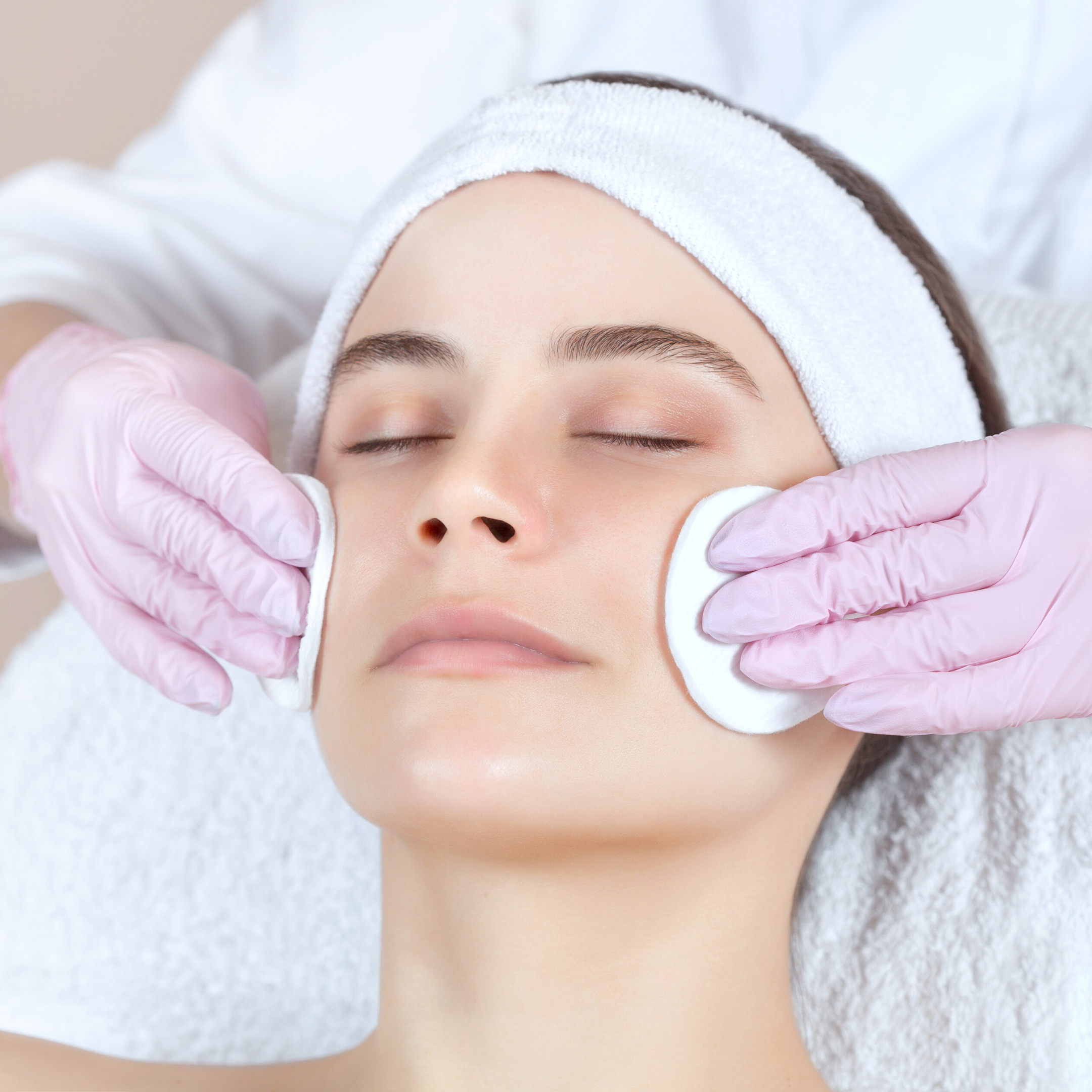
How to Build a Minimalist Skincare Routine That Still Gets Real Results
You've probably got a shelf full of serums you're not sure you need. Maybe you've read enough about niacinamide, retinol, vitamin C, and peptides that the words have lost their meaning. That is a completely rational response to an industry that monetizes confusion. The truth is that most people's skin would do better with fewer products, applied consistently, than with twelve steps applied chaotically. We see this in practice, and the research backs it up.
|
QUICK ANSWER What is a minimalist skincare routine? A minimalist skincare routine uses 3 core products: a gentle, pH-balanced cleanser (pH 4.5–5.5), a targeted active serum, and a barrier-supporting face oil. Applied consistently twice daily, this approach addresses most common skin concerns, including dehydration, congestion, and early signs of aging, without disrupting the skin microbiome or triggering reactive sensitivity. |
Why Most Skincare Routines Stop Working (Even the Expensive Ones)
The problem usually isn't the products. Most people have tried three different cleansers by the time they find us. The problem was never the cleanser. When you layer multiple actives (acids, retinoids, vitamin C derivatives, enzyme exfoliants) across morning and evening routines, you create competition between ingredients that can't always coexist. A 2021 study published in the Journal of Investigative Dermatology found that repeated barrier disruption increases transepidermal water loss (TEWL), which paradoxically makes skin more prone to the breakouts and dullness people were trying to correct in the first place.
Less isn't giving up. It's working with your skin's biology instead of against it.

What Does Skin Actually Need? The Science, Not the Marketing
Strip it back to physiology. Healthy skin requires four things:
• A balanced acid mantle (pH 4.5–5.5)
• An intact stratum corneum
• Regulated sebum production
• A controlled inflammatory response
Every product you apply either supports or disrupts one of these four functions. Most 10-step routines compromise at least two.
Do I really need a serum if I'm using a good cleanser and moisturizer?
Yes, with a caveat. A serum is where targeted correction happens. Cleansers rinse off before active ingredients can meaningfully penetrate. Moisturizers form an occlusive or humectant layer, not a treatment layer. A serum with the right molecular weight and delivery system reaches the living dermis. Without it, you're maintaining the surface, not addressing the underlying physiology. That said, one well-formulated serum beats four competing ones every time.
The 3-Step Minimalist Routine That Actually Works

|
STEP 1 — CLEANSE: Restore, Don't Strip The goal of cleansing is acid mantle preservation. A cleanser at the right pH (4.5–5.5) removes environmental residue without dismantling the skin's bacterial balance. Research in Skin Pharmacology and Physiology links more alkaline cleansers, including many marketed as 'gentle', to a temporary rise in skin pH above 7, which increases P. acnes activity and compromises barrier function. |

|
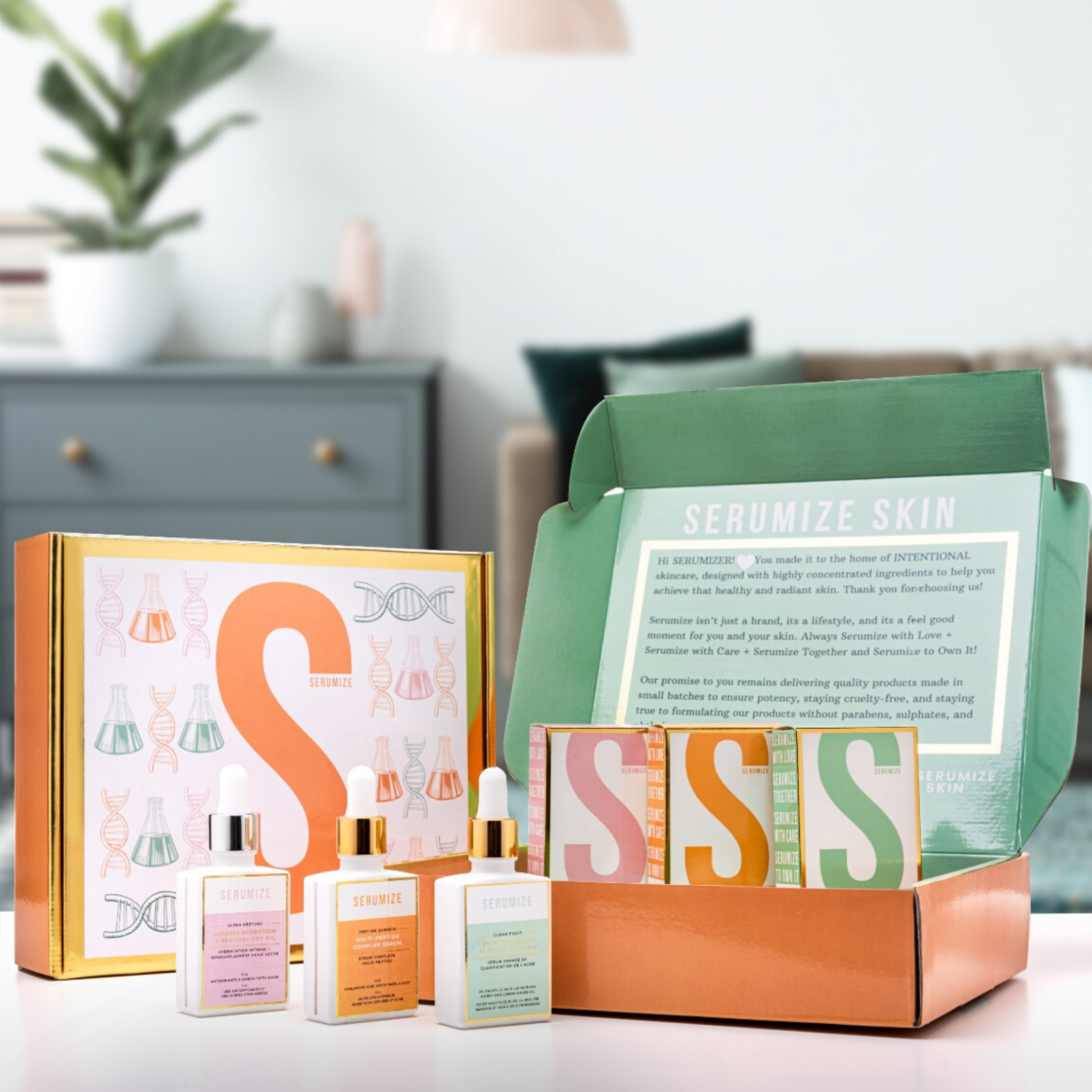
STEP 2 — TREAT: One Serum, One Job The most common skin concerns, congestion, hyperpigmentation, dehydration, and early fine lines, respond to a small cluster of actives: salicylic acid for follicular clearance, niacinamide for sebum regulation and barrier support, and low-concentration retinaldehyde for cellular turnover. The critical variable is delivery. An ingredient sitting on the skin's surface does little. Encapsulated or pH-adjusted formulas penetrate more effectively, which is why formulation chemistry matters more than concentration alone. The SERUMIZE Clear Fight Serum addresses this directly, delivering salicylic acid in a stable, low-irritancy matrix calibrated to maintain efficacy without requiring a nightly acid rotation. For skin prone to congestion or reactivity, this kind of precision consistently outperforms a competing stack of treatments. |

|
STEP 3 — RESTORE: The Case for a Face Oil Many people skip face oils out of fear. That instinct is understandable, and almost always wrong. A non-comedogenic botanical oil rich in linoleic acid restores the lipid components of the skin barrier that water-based moisturizers physically cannot replace. Linoleic acid deficiency is measurably associated with both acne and premature aging. A 2019 paper in Clinical, Cosmetic and Investigational Dermatology confirmed that topical application of linoleic-rich oils can restore barrier integrity within four weeks of consistent use. The SERUMIZE Ultra Restore Oil functions as this final step, locking in the serum's active work and reinforcing the barrier overnight. It is not an indulgence. It is the step most people are missing. |
Minimalist vs. Multi-Step: What the Data Shows
|
|
Minimalist (3 Steps) |
Multi-Step (8–12 Steps) |
|
Barrier Disruption Risk |
Low |
Moderate to High |
|
Ingredient Conflict Risk |
Low |
High |
|
Consistency Rate |
High |
Lower |
|
Active Penetration |
Optimized |
Potentially Compromised |
|
Microbiome Impact |
Minimal |
Significant with daily exfoliants |
|
Clinical Outcome |
Comparable to moderate routines |
Variable |

How to Start — Without Starting Over
You don't need to throw everything out. Start by pairing back to three products for four weeks. One cleanser. One active serum. One restoring oil. Keep a notes app log, skin condition in the morning, and how your face feels by midday. Most people see stabilization within two weeks and meaningful correction within six.
If you're working through congestion, sensitivity, or adult acne, the SERUMIZE Cleanser + Clear Fight Serum + Ultra Restore Oil Bundle was designed to function as a complete system, so the steps don't compete with each other. That matters more than the individual products.
|
BUILD YOUR ROUTINE If you came here because you're overwhelmed, that makes complete sense. The skincare industry is not designed to simplify your life. SERUMIZE was built because a biochemist and a medical aesthetician kept seeing the same problem: people using too much, achieving too little. Start with the SERUMIZE Cleanser + Clear Fight Serum + Ultra Restore Oil Bundle — and let the formula do the work. |
References
1. Proksch, E., Brandner, J. M., & Jensen, J. M. (2008). The skin: an indispensable barrier — this foundational paper establishes the stratum corneum's role in preventing TEWL and microbial entry. Experimental Dermatology, 17(12), 1063–1072.
2. Draelos, Z. D. (2018). The science behind skin care: Cleansers — reviews pH impact on barrier function and microbiome balance, with particular attention to surfactant chemistry. Journal of Cosmetic Dermatology, 17(1), 10–14.
3. Fluhr, J. W., et al. (2010). Functional assessment of a skin care system in patients on chemotherapy — found measurable improvement in barrier recovery with simplified lipid-based regimens. Skin Pharmacology and Physiology, 23(6), 284–292.
4. Elias, P. M. (2005). Stratum corneum defensive functions: an integrated view — establishes the link between lipid composition (including linoleic acid) and barrier competence. Journal of Investigative Dermatology, 125(2), 183–200.
5. Letawe, C., Boone, M., & Piérard, G. E. (1998). Digital image analysis of the effect of topically applied linoleic acid on acne microcomedones — demonstrated measurable comedone reduction with linoleic acid application over 30 days. Clinical and Experimental Dermatology, 23(2), 56–58.
6. Dréno, B., et al. (2017). Microbiome in healthy skin, update for dermatologists — outlines how disruption of the skin microbiome through over-cleansing and excessive actives contributes to dysbiosis and inflammatory skin conditions. Journal of the European Academy of Dermatology and Venereology, 31(3), 454–459.
7. Rodan, K., et al. (2016). Skincare Bootcamp: The Evolving Role of Skincare — a clinical review of ingredient interactions and the argument for simplified, function-led routines. Plastic and Reconstructive Surgery Global Open, 4(12 Suppl), e1152.
8. American Academy of Dermatology Association (2023). Skin care basics — clinical guidance on routine construction, with recommendations supporting minimal, targeted product use for sensitive and acne-prone skin types. aad.org/public/everyday-care/skin-care-basics.
SERUMIZE | Formulated by Science. Edited for Real Life.