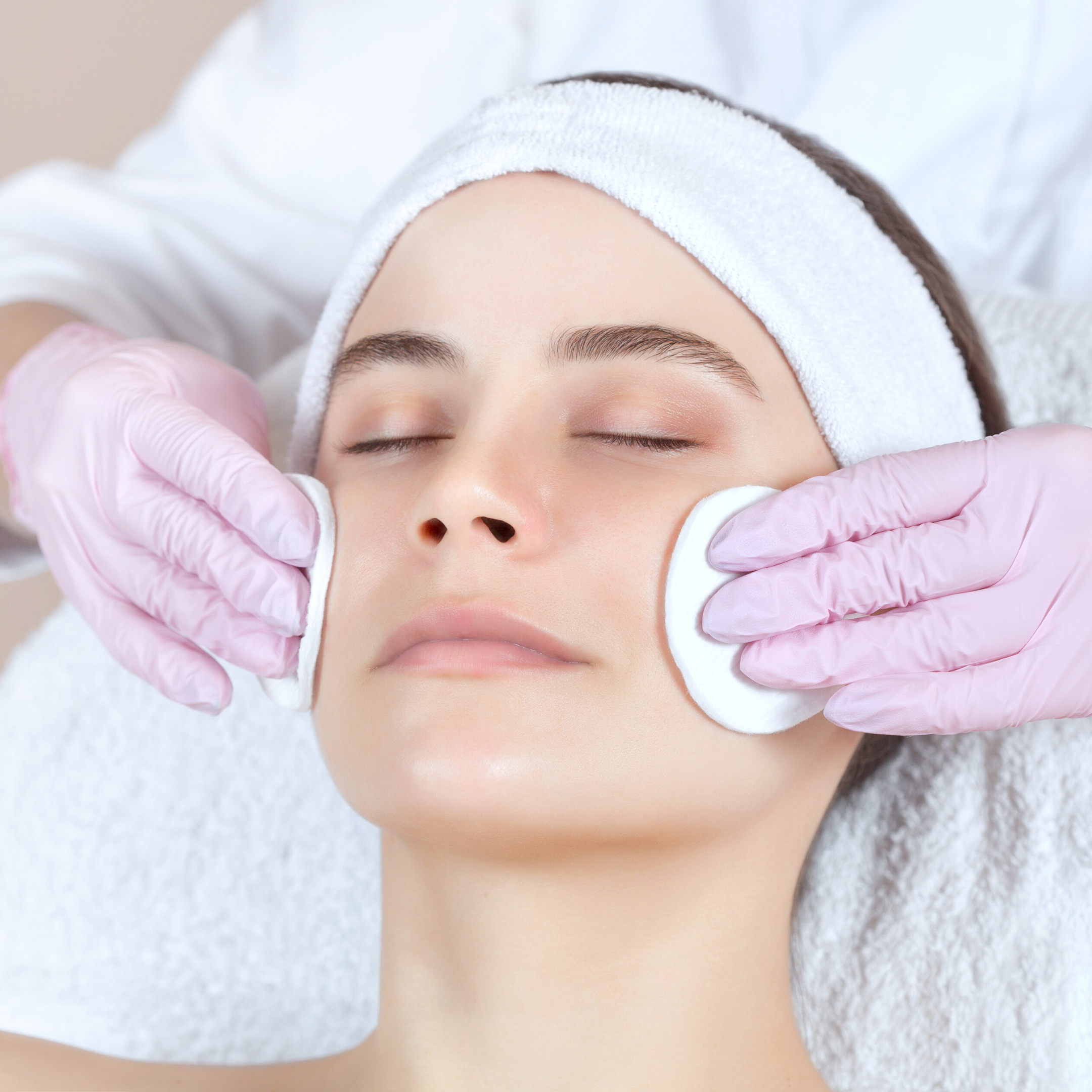
We see it every week in practice. A client in their mid-forties, genuinely surprised by the hyperpigmentation that appeared “seemingly overnight,” by the fine lines deepening faster than they expected, by the texture that wasn’t there two years ago. They’ve been consistent with their routine. They cleanse. They moisturize. They just skipped the SPF, or worse, used it wrong. That distinction matters more than almost any other decision in preventive skincare. Most people have been given conflicting advice about sunscreen from the moment they started paying attention to skin. The problem was never the product. It was the misinformation layered around it.
|
QUICK ANSWER |
|
What are the most common sunscreen myths? The six most persistent sunscreen myths are: SPF is only necessary on sunny days, dark skin tones don’t need sun protection, SPF 50 is excessive, makeup with SPF provides sufficient coverage, sunscreen blocks all vitamin D synthesis, and indoor skin doesn’t require protection. All are clinically incorrect. UVA radiation, the wavelength most responsible for collagen breakdown and photoaging, penetrates cloud cover, standard window glass, and melanin-rich skin alike. Daily broad-spectrum SPF is non-negotiable across all skin types, tones, and environments. |
 Does Dark Skin Really Need Sunscreen?
Yes. Unequivocally. Melanin provides an estimated natural sun protection factor of roughly 13, a meaningful buffer, not adequate daily defense. A landmark analysis published in Dermatology Nursing found that while melanoma is statistically less common in darker skin tones, it is consistently diagnosed at later, more advanced stages, partly attributable to the entrenched belief that protection is unnecessary for melanin-rich skin.
UVA-induced dermal damage, collagen degradation, and hyperpigmentation occur across all Fitzpatrick skin types. The pigmentation that many darker-skinned clients describe as “just the way my skin is” is, in many cases, cumulative photodamage. Broad-spectrum SPF is not a product designed for pale skin. It is a clinical requirement for all skin.
SPF 50 vs SPF 30: Is the Difference Actually Worth It?
On paper, the numbers are close. SPF 30 blocks approximately 97% of UVB rays; SPF 50 blocks approximately 98%. The 1% gap sounds negligible. In practice, it isn’t. Research cited by dermatology organizations consistently shows that most people apply between 25 and 50% of the required 2mg per cm² dose, meaning labeled SPF values are rarely achieved in real-world use. SPF 50 provides meaningful headroom when application is suboptimal, which it almost always is. The factor that matters more than the number on the bottle is consistent, correctly layered application. But between two otherwise equivalent products, higher SPF offers a genuine clinical buffer.
|
SPF Level |
UVB Blocked |
UVA Rating |
Best For |
|
SPF 15 |
93% |
Moderate |
Low-exposure days |
|
SPF 30 |
97% |
Good |
Daily use, most skin types |
|
SPF 50 |
98% |
Excellent |
High-exposure or post-procedure |
Note: UVB protection values are calculated at a standard 2mg/cm² application. Real-world protection is typically lower due to under-application and reapplication failure.
“I Work Indoors All Day. Do I Actually Need SPF?”
This is the question we hear from clients most often. The short answer: yes, and the evidence is striking. UVA radiation (the wavelength most associated with collagen breakdown and accelerated skin ageing) penetrates standard window glass. A 2012 case report in the New England Journal of Medicine documented a truck driver whose left-side face showed markedly more severe photoaging than the right after 28 years of cumulative UVA exposure through his cab window. One side was protected; one was not.
The skin does not distinguish between sitting at a desk near a window and standing outside. UVA exposure indoors is lower in intensity, not zero. Daily SPF application, 365 days a year, is the clinical standard.
Can Makeup with SPF Replace a Dedicated Sunscreen?
No. SPF values in cosmetic products are measured in controlled conditions using the standard 2mg per cm² application density. Nobody applies foundation at that density, and nobody should. Research on real-world SPF delivery from cosmetic products found that foundations with SPF labelling provided, at best, a fraction of their stated protection under actual use conditions. A dedicated broad-spectrum SPF applied as the final skincare step before any cosmetic product remains the clinical standard. Makeup with SPF is an incidental supplement, not a substitute.
Does Sunscreen Actually Block Vitamin D Synthesis?
The concern is understandable, but the evidence doesn’t support it. No study has demonstrated that correctly applied sunscreen causes clinically significant vitamin D deficiency. Application inconsistency in the real world is sufficient to allow adequate UV-D synthesis. The American Academy of Dermatology’s position is unambiguous: the established risks of unprotected UV exposure outweigh any theoretical vitamin D benefit from deliberate sun exposure. Supplementation, not sun damage, is the clinical answer for those concerned about deficiency.
SPF on Cloudy Days: What Most People Get Wrong
Cloud cover reduces UVB intensity moderately. It does not block UVA. The WHO has documented that up to 80% of UV radiation penetrates overcast conditions, and the ageing wavelength is largely unaffected by what’s happening above the clouds. The impulse to skip SPF on grey mornings is precisely when the protection gap opens up silently.

|
CLINICAL NOTE — SERUMIZE ULTRA RESTORE OIL |
|
SPF handles the initial UV hit. What it cannot address is what happens after. UV exposure generates reactive oxygen species that continue to break down collagen and impair DNA repair mechanisms for hours after sun contact; a process researchers have termed “dark UV reactions.” SERUMIZE Ultra Restore Oil is formulated around this gap. Its antioxidant complex and omega fatty acids work to neutralize residual oxidative stress, reinforce the skin’s lipid barrier, and support dermal repair at the cellular level. Applied as the final morning step before your SPF, or as the last stage of an evening routine. It is a clinical complement, not a cosmetic add-on. |
|
BUILD YOUR DAILY PROTECTION ROUTINE The skin you have in ten years is being shaped by what you’re doing, or not doing, right now. If you’re not sure where SPF fits in your current routine, or whether your formula is actually delivering adequate protection, start with the routine builder. We’ll identify what’s working, what’s missing, and what to do next. → Build Your Routine → |
References & Clinical Sources
1. Halder RM, Nootheti PK. Ethnic skin disorders overview. J Am Acad Dermatol. 2003;48(6 Suppl):S143–S148.
2. Bradford PT. Skin cancer in skin of color. Dermatol Nurs. 2009;21(4):170–178.
3. Gordon JRS, Brieva JC. Unilateral dermatoheliosis. N Engl J Med. 2012;366:e25. [Asymmetric ageing from UVA through car-window glass.]
4. Autier P, et al. Sunscreen use and intentional exposure to ultraviolet A and B radiation: what are the facts? Br J Cancer. 1998;77(1):62–67.
5. Lim HW, et al. Current challenges in photoprotection. J Am Acad Dermatol. 2017;76(3 Suppl 1):S91–S99.
6. Diffey BL. Sunscreens as a preventive measure in melanoma: an evidence-based approach or the precautionary principle? Br J Dermatol. 2009;161 Suppl 3:25–27.
7. World Health Organization. Ultraviolet radiation and the INTERSUN Programme. WHO; 2017. [Documents UVA transmission through cloud cover at up to 80%.]
8. American Academy of Dermatology. Position Statement on Vitamin D. AAD; 2019. [Concludes that the risks of unprotected UV exposure outweigh theoretical vitamin D benefit from sun exposure.]
All clinical research cited is summarized in plain language within the body text. Readers are encouraged to review source abstracts via PubMed, the WHO, or the AAD’s online library.
SERUMIZE · Clinical Skincare · serumize.com
Founded by a biochemist and medical aesthetician.