You have probably tried every cleanser the internet has recommended. Double-cleansing. Clay masks twice a week. Those satisfying pore strips that seemed to do something, until three days later, when the blackheads were back. If your skin still feels congested, bumpy under the surface, or looks dull no matter what you wash with, the problem was never your cleanser.
Clogged pores are a biochemical problem. Solving them requires understanding what actually forms inside a pore and then choosing ingredients that can reach it.
|
QUICK ANSWER |
|
|
Root cause |
Excess sebum and dead skin cells mix inside the follicle, oxidise, and harden into a plug (comedone). |
|
What dissolves it |
Beta-hydroxy acids (BHA/salicylic acid) oil-soluble, so they penetrate the follicle lining where water-based cleansers cannot. |
|
What prevents recurrence |
Consistent chemical exfoliation + sebum regulation + a non-comedogenic barrier. |
|
What makes it worse |
Over-washing, physical scrubs, pore strips, and occlusives applied to skin that hasn't been cleared first. |
|
Timeline |
Visible clearing typically occurs within 4–8 weeks of a consistent BHA protocol. |

What Actually Causes Clogged Pores? (It Has Nothing to Do With Dirt)
Here is the misconception we correct most often: clogged pores are not caused by a failure to cleanse. They are caused by the normal, unavoidable interaction between sebum, dead keratinocytes, and the anatomy of a hair follicle.
Sebum is produced continuously by your sebaceous glands. When sebum and shed skin cells accumulate inside the follicle faster than they can be expelled, they compact into what dermatologists call a comedone. An open comedone (a blackhead) looks dark not because of dirt, but because the material at the surface of the pore has oxidised when exposed to air. Melanin and lipid peroxidation are the culprits. The same process that turns a cut apple brown.
A closed comedone (a whitehead) has an intact skin layer over it, so no oxidation occurs. This is also why pore strips pull out the oxidised plug at the top, leave the deeper compacted material untouched, and why the pore refills within days.
Contributing factors include sebum overproduction (hormonally driven, particularly by androgens), abnormal follicular keratinisation (where keratinocytes don't shed evenly and instead clump together at the follicle wall), and the use of comedogenic skincare that introduces occlusive ingredients before the pore is clear.
Why Do My Pores Keep Getting Clogged Even When I Cleanse Twice a Day?
Over-cleansing is, counterintuitively, a driver of congestion. When you strip the skin's lipid barrier with surfactants, especially sulphate-heavy formulas, sebaceous glands compensate by producing more sebum. You clean the surface. The gland responds by producing more of what caused the problem. It is a cycle the skin will always win.
Mechanical exfoliation like scrubs, brushes, textured cloths, create microtears in the follicle wall and triggers inflammation that can worsen comedone formation. The skin interprets friction as injury and accelerates cell turnover in ways that increase keratinisation inside the pore, not decrease it.
The Sebum Oxidation Problem: Why Topical Solutions Fail
Most skincare products are water-based. Sebum is, by definition, oil-based. These two things do not mix, which means water-soluble actives applied to the surface of congested skin cannot penetrate the follicle environment where the problem is forming. This is not a failure of formulation concentration. It is a physics problem, and it explains why your glycolic acid toner clears your skin's surface texture without ever resolving the congestion underneath.
The only class of exfoliating acid that is oil-soluble and therefore able to follow the sebum pathway into the follicle, is the beta-hydroxy acid family. Salicylic acid is the most clinically studied member.
BHA vs. AHA: Which Acid Actually Clears Clogged Pores?
Both beta-hydroxy acids and alpha-hydroxy acids are legitimate exfoliants. They do different things. Using the wrong one for congestion is like using a mop on a blocked drain.
|
Category |
BHA (Salicylic Acid) |
AHA (Glycolic/Lactic) |
|
Solubility |
Oil-soluble |
Water-soluble |
|
Works inside follicle? |
Yes |
No, surface only |
|
Best for |
Oily skin, blackheads, comedones, congestion |
Dull skin, uneven texture, post-inflammatory marks |
|
Anti-inflammatory? |
Yes, inhibits prostaglandins |
No |
|
Penetration depth |
Into sebaceous follicle |
Stratum corneum only |
|
Can they be combined? |
Yes, AHA on surface + BHA in follicle is complementary |
|
A 2003 clinical roundtable published in Cutis confirmed salicylic acid's unique ability to penetrate sebaceous follicles and reduce microcomedone formation at the source, not just after comedones become visible. This distinction matters clinically. By the time you can see a blackhead, the follicle has been congested for weeks.
Do I Need to Have My Pores Extracted, or Can Skincare Actually Clear Them?
Both. Manual extractions remove existing comedones efficiently when performed correctly. They are not optional for severe congestion, and no topical product will dissolve a fully formed, hardened plug overnight. But extractions without a consistent chemical exfoliation protocol are maintenance without a plan. The pore will refill. Kligman's landmark 1974 research on acne pathogenesis established that the microcomedone, the precursor to a visible blackhead, begins forming weeks before it's detectable. Preventing that process is where topical chemistry is most effective.
Consistent use of a BHA at an effective concentration (0.5–2% salicylic acid, pH 3–4) has been shown in multiple trials to reduce both open and closed comedones by up to 50% over 12 weeks, with meaningful changes visible at weeks 4–6. The evidence base on this is solid.

How We Approach This at SERUMIZE
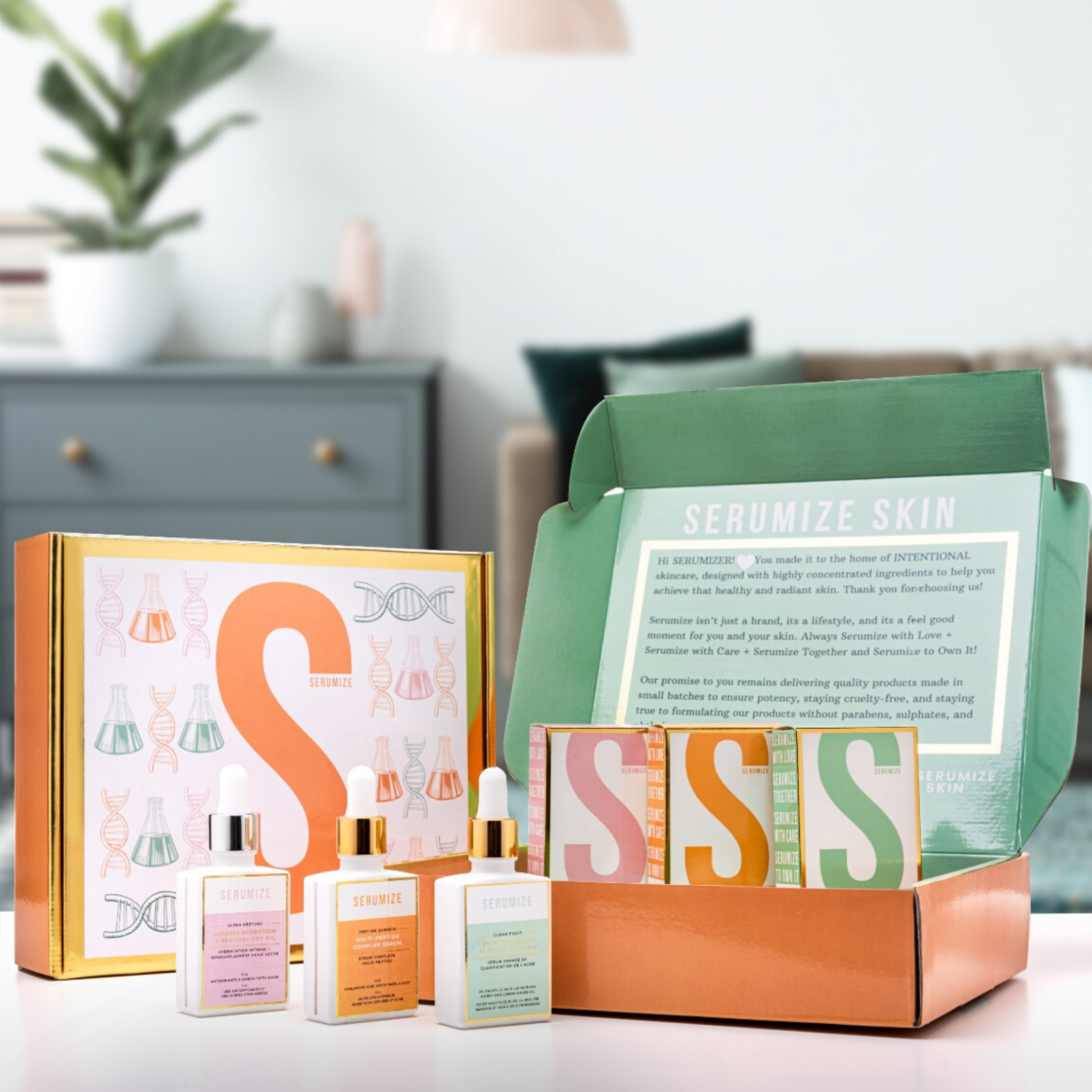
When clients come to us with chronic congestion, the first thing we address is the follicular environment not the surface. The SERUMIZE Clear Fight Serum was formulated specifically to work at this level. It delivers 2% salicylic acid at an optimized pH, combined with niacinamide (which research from the British Journal of Dermatology has shown reduces sebum excretion rate) and zinc PCA (a sebum-regulatory mineral that limits overproduction without drying). Together, these ingredients target the mechanism of clog formation, not just the cosmetic result.
Clients who use it consistently typically notice fewer active breakouts within two to three weeks and visibly reduced congestion in four to six weeks, which aligns with the biological timeline of comedone clearance.
SERUMIZE FORMULATOR'S NOTE: We do not use physical exfoliants in any of our formulas. Every SERUMIZE product is non-comedogenic tested and free of pore-occluding silicones and waxes. The Clear Fight Serum is water-light and absorbs in under 30 seconds, specifically so it layers under actives without interference.
The Pore-Clearing Protocol: What the Sequence Should Look Like
Skincare layering is not intuitive. Most people have three good products and apply them in the wrong order. Here is what the evidence supports for clearing and preventing clogged pores:
Morning
• Gentle, sulphate-free cleanser: removes overnight sebum without barrier disruption
• Antioxidant serum (Vitamin C or niacinamide): stabilises sebum against oxidation
• Non-comedogenic moisturiser: hydration is non-negotiable; dehydrated skin over-produces sebum
• SPF 30+: UV exposure accelerates lipid peroxidation and worsens comedone oxidation
Evening
• Double-cleanse if wearing SPF or makeup: oil cleanser first, then water-based
• BHA serum (SERUMIZE Clear Fight Serum): on clean, dry skin, 3–5 nights per week to start
• Hydrating serum or barrier moisturiser: seal without occluding
• Retinoid (optional, 2–3x per week): normalises follicular keratinisation; introduce slowly and on alternate nights to BHA.
What to avoid: Mineral oil, isopropyl myristate, lanolin, and heavy silicones (dimethicone in high concentrations) have all been identified in comedogenicity research as pore-occluding. So have several algae extracts and many fragrance compounds. Check your moisturiser and sunscreen before your serum. The cleanest BHA in the world will underperform if your moisturiser is resealing the pore.
If Your Skin Is Still Congested, Start Here
You came to this article because your skin is not responding to what you have been using. That is not a willpower problem or a hygiene problem; it is a chemistry problem. And chemistry has a clear answer: get the right acid into the follicle, regulate the sebum, protect the barrier, and give it eight weeks.
The SERUMIZE Clear Fight Serum was built for exactly this: not as a spot treatment, not as a toner, but as a daily-use follicular serum that works at the site of congestion formation. If you are ready to stop managing symptoms and address the mechanism, this is where we would have you start.
→ See the Formula | Build Your Routine | Find Your Protocol
REFERENCES
1. Cunliffe, W.J. et al. (2000). Comedone formation: Etiology, clinical presentation, and treatment. Clinics in Dermatology, 18(5), 651–664.
2. Bhate, K. & Williams, H.C. (2013). Epidemiology of acne vulgaris. British Journal of Dermatology, 168(3), 474–485.
3. Draelos, Z.D. (2006). The effect of salicylic acid on acne and related disorders. Journal of Drugs in Dermatology, 5(3), 224–228.
4. Ganceviciene, R. et al. (2012). Skin anti-aging strategies. Dermato-Endocrinology, 4(3), 308–319.
5. Kligman, A.M. (1974). An overview of acne. Journal of Investigative Dermatology, 62(3), 268–287.
6. American Academy of Dermatology Association. (2023). Acne: Diagnosis and treatment. aad.org.
7. Berson, D.S. et al. (2003). Current concepts in the treatment of acne: Report from a clinical roundtable. Cutis, 72(1 Suppl), 5–13.
8. Shalita, A.R. (2004). The role of topical retinoids in the management of acne. Journal of Drugs in Dermatology, 3(5 Suppl), S10–S15.
© SERUMIZE | Clinical Skincare, Rigorously Formulated