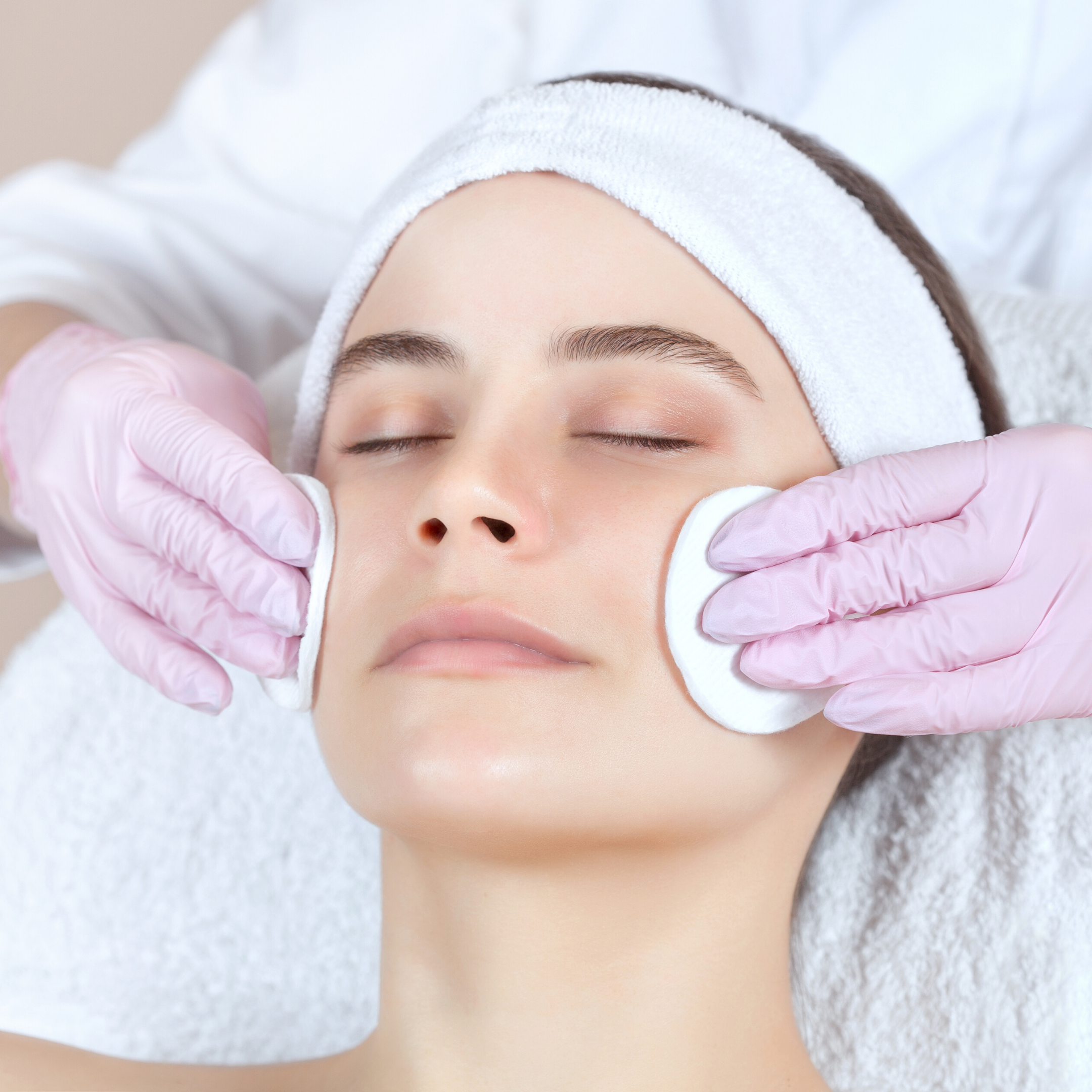
Most people have quit retinol at least once. Night four: cheeks tight and red, and the bottle goes to the back of a drawer. We see this constantly. Your skin was rarely the problem. The protocol was.
|
QUICK ANSWER: HOW TO START USING RETINOL Start with a 0.25–0.3% retinol. Apply a pea-sized amount to dry skin at night: two nights a week for two weeks, three nights for the next two weeks; then every other night. Buffer with a moisturizer or oil, wear SPF 30+ every morning, and expect visible change at around 12 weeks. |

What does retinol actually do to skin?
Retinol is not an exfoliant. Peeling is a side effect, not the mechanism, and chasing it is how barriers get damaged. Retinol behaves as a precursor to retinoic acid, the molecule that signals cells to build collagen and turn over faster.3. In a 24-week trial on older skin, 0.4% retinol reduced fine wrinkles and raised collagen-production markers.1
Which form of retinol is best for beginners?
Skin can only use retinoic acid, so every other form has to be converted. Fewer conversion steps mean more potency and more irritation.4
|
Form |
Steps to retinoic acid |
Best for |
|
Retinyl esters |
3 |
Very sensitive skin |
|
Retinol |
2 |
Most beginners |
|
Retinaldehyde |
1 |
Experienced users |
|
Tretinoin (prescription) |
0 |
Prescribed use |

How often should you use retinol?
Two nights a week for two weeks, three for the next two, then alternate nights. Daily use is not the goal. If skin stings or feels tight, skip a night; that is the plan working.
How do you buffer retinol?
We recommend Ultra Restore Oil at both ends of the routine. In our experience, a thin layer before retinol blunts the peak of irritation; a layer afterward supports the barrier while it adapts. Buffering trades a little speed for tolerance. The retinol you can keep using beats the stronger one you quit.
Why is my skin breaking out since I started retinol?
Two things look alike and need opposite responses. Retinoids speed cell turnover, which can push clogged pores to the surface. That is a purge. Redness, burning, and flaking are a reaction: your barrier asking you to slow down.5
|
|
Purge |
Reaction |
|
Where |
Your usual breakout zones |
New areas, often cheeks |
|
Looks like |
Small whiteheads, clogged pores |
Redness, stinging, flaking |
|
Timeline |
Settles within about six weeks |
Persists or escalates |
|
Action |
Hold your frequency |
Pause, repair, restart lower |
What should you not mix with retinol?
Keep AHAs, BHAs, benzoyl peroxide, and scrubs off retinol nights; use them in the morning or on off nights. Avoid retinoids during pregnancy; ask your doctor if you are trying to conceive or breastfeeding.6
|
Build a retinol routine you’ll actually keep Retinol rewards the people who stay long enough to see it: twelve weeks of nights their skin could tolerate. See how Ultra Restore Oil fits into a retinol ramp-up, then build the rest around it. |
Sources
1. Kafi R, Kwak HSR, Schumacher WE, et al. Improvement of naturally aged skin with vitamin A (retinol). Arch Dermatol. 2007;143(5):606–612. What it found: Older adults used a 0.4% retinol lotion for 24 weeks. Fine wrinkles improved and the skin showed more collagen-building activity than the untreated comparison.
2. Shao Y, He T, Fisher GJ, Voorhees JJ, Quan T. Molecular basis of retinol anti-ageing properties in naturally aged human skin in vivo. Int J Cosmet Sci. 2017;39(1):56–65. What it found: A week of 0.4% retinol triggered repair signals in aged skin similar to those from prescription retinoic acid, without noticeable side effects.
3. Kang S, Duell EA, Fisher GJ, et al. Application of retinol to human skin in vivo induces epidermal hyperplasia and cellular retinoid binding proteins characteristic of retinoic acid but without measurable retinoic acid levels or irritation. J Invest Dermatol. 1995;105(4):549–556. What it found: Retinol thickened the living layers of skin the way retinoic acid does, with no measurable irritation, which supports its role as a gentler precursor.
4. Fluhr JW, Vienne MP, Lauze C, et al. Tolerance profile of retinol, retinaldehyde and retinoic acid under maximized and long-term clinical conditions. Dermatology. 1999;199(Suppl 1):57–60. What it found: Compared how irritating each retinoid form is with repeated use. Tolerability differs by form, which is why your starting form matters.
5. Mukherjee S, Date A, Patravale V, et al. Retinoids in the treatment of skin aging: an overview of clinical efficacy and safety. Clin Interv Aging. 2006;1(4):327–348. What it found: A review of retinoid trials in aging skin. Visible gains arrive over months, and redness and scaling are the most common side effects.
6. American Academy of Dermatology Association. Retinoid or retinol? Guidance on starting, using and protecting skin. aad.org. What it found: Advises beginning with the gentlest formula, building up slowly, applying at night, using sun protection daily, and avoiding retinoids in pregnancy.
This article is general education and not a substitute for individual medical advice. Consult a dermatologist before starting a retinoid if you have a skin condition or are pregnant.