Your face is red, and the internet has told you it’s rosacea. Sometimes it is; more often, we see a damaged barrier, an overgrown yeast, or a breakout that healed but left its color behind. Each needs a different response, and the wrong one makes redness worse.
|
QUICK ANSWER: HOW TO REDUCE SKIN REDNESS To reduce skin redness, first identify the type: rosacea, barrier-driven irritation, seborrheic dermatitis, or post-inflammatory erythema. Then restore the barrier with fragrance-free cleansing and lipid support, use niacinamide or azelaic acid where appropriate, and wear daily SPF. If redness burns or persists beyond four weeks, see a dermatologist. |

What Are The Four Types Of Facial Redness?
|
Type |
What drives it |
Tell-tale sign |
What calms it |
|
Rosacea |
Vascular and neuro-inflammatory reactivity |
Flushing with heat, alcohol, or stress |
Azelaic acid, SPF, medical review |
|
Barrier-driven |
Lipid loss from over-exfoliation or harsh cleansing |
Tight, stinging skin after new actives |
Ceramides, fatty acids, fragrance-free care |
|
Seborrheic dermatitis |
Inflammatory reaction to Malassezia yeast |
Red with greasy flaking near nose and brows |
Antifungal treatment, gentle cleansing |
|
Post-inflammatory erythema |
Dilated capillaries after acne inflammation |
Flat pink marks where spots were |
Time, niacinamide, azelaic acid, SPF |
Why Is My Face Always Red Even When I Use Gentle Products?
Gentle is a marketing word, not a clinical one. Fragrance remains among the most common contact allergens, and a strained barrier reacts to it faster. In a 2020 study, researchers measured rosacea skin and found it lost more water and held less hydration than healthy skin. A weak barrier, it seems, is part of the condition rather than a side effect.
How Do You Calm Redness Without Damaging the Barrier?
Subtract first. Pause exfoliating acids and retinoids for two weeks, then rebuild. A review of niacinamide found it increases ceramide and fatty acid production in the outer skin layer while dampening inflammatory signalling. For rosacea, an international expert panel lists azelaic acid among its topical options and stresses gentle skincare and sun protection.

Does Fragrance-Free Skincare Reduce Redness?
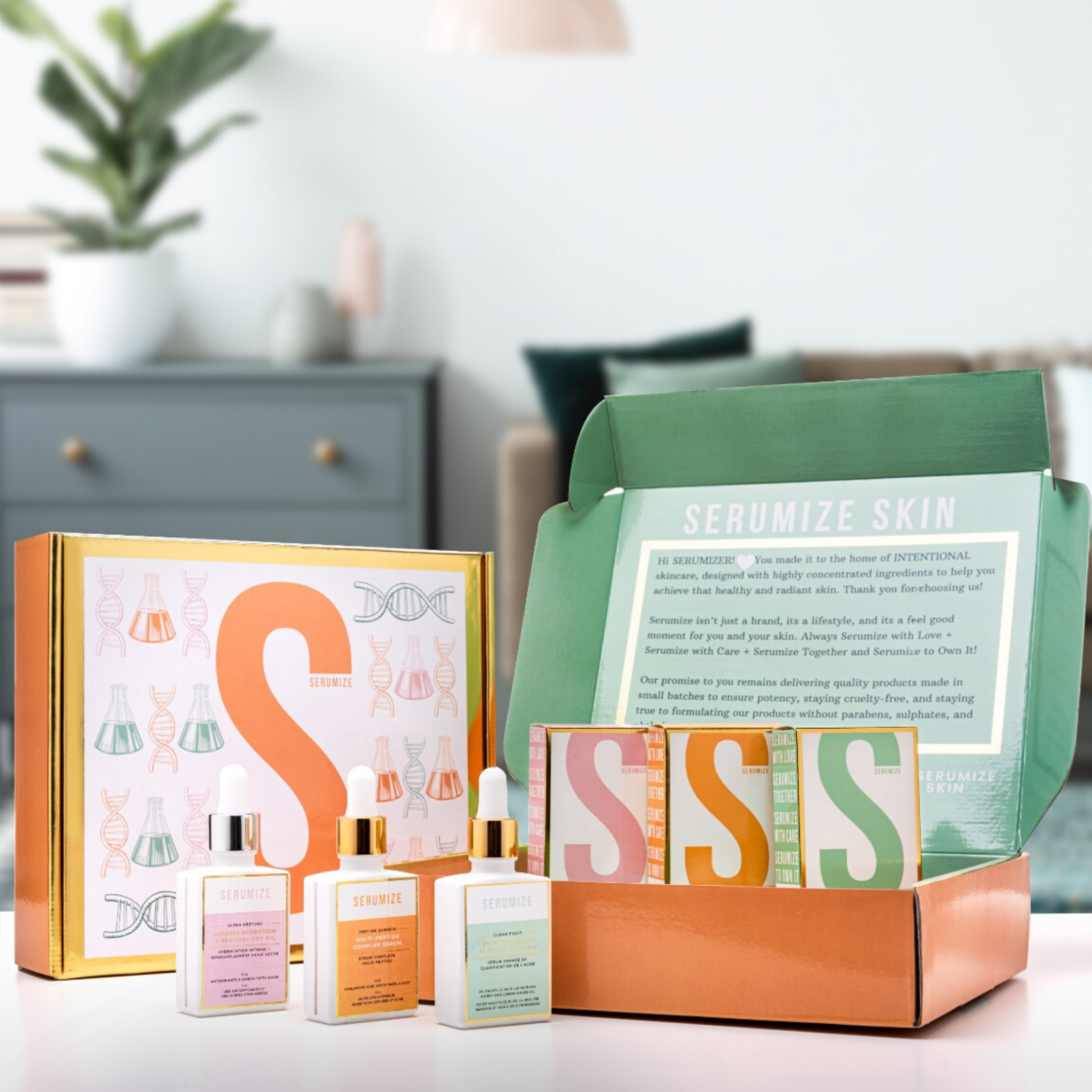
In our practice, it is the first change we make. Ultra Restore Cleanser removes impurities without stripping the lipids your barrier relies on, and Ultra Restore Oil supplies lipids that daily life takes out. Both are fragrance-free, so reactive skin has nothing to react to. We would start here before adding any active.

Find The Routine That Fits Your Redness
Most people reach us after trying calming masks, green-tinted primers, and a self-diagnosis of rosacea. The problem was never a lack of products. Burning, visible vessels, or redness that will not settle deserve an in-person dermatology assessment, and no routine replaces one. For everything else, begin with the barrier.
|
Start with Ultra Restore Cleanser + Ultra Restore Oil |
Sources
1. Gallo RL, Granstein RD, Kang S, et al. Standard classification and pathophysiology of rosacea: the 2017 update by the National Rosacea Society Expert Committee. J Am Acad Dermatol. 2018;78(1):148-155.
2. Schaller M, Almeida LMC, Bewley A, et al. Rosacea treatment update: recommendations from the global ROSacea Consensus (ROSCO) panel. Br J Dermatol. 2017;176(2):465-471.
3. Medgyesi B, Dajnoki Z, Béke G, et al. Rosacea is characterized by a profoundly diminished skin barrier. J Invest Dermatol. 2020;140(10):1938-1950.
4. Wohlrab J, Kreft D. Niacinamide: mechanisms of action and its topical use in dermatology. Skin Pharmacol Physiol. 2014;27(6):311-315.
5. Borda LJ, Wikramanayake TC. Seborrheic dermatitis and dandruff: a comprehensive review. J Clin Investig Dermatol. 2015;3(2).
6. Elias PM. Skin barrier function. Curr Allergy Asthma Rep. 2008;8(4):299-305.
7. American Academy of Dermatology Association. Rosacea: overview. aad.org.
8. American Academy of Dermatology Association. Contact dermatitis: overview. aad.org.