You’ve switched cleansers and tried the ‘sensitive skin’ range. Paid for the dermatologist-recommended moisturizer, and still, the redness, the tightness, the slow-building irritation that no one can explain. The problem was never the formula category. It was one word buried at the bottom of the ingredient list: fragrance. On a label, that single word is a legal black box. It can represent a blend of up to 3,000 approved chemical compounds, none of which the manufacturer is required to disclose individually. We formulate without it entirely. Here’s why that decision isn’t cosmetic; it’s clinical.
⚡ QUICK ANSWER
What does ‘fragrance-free’ mean on a skincare label?
Fragrance-free means no fragrance compounds, synthetic or natural, were added to the formula. It is not the same as unscented, which may still contain masking fragrances to neutralise chemical odor. Dermatologists classify fragrance as a leading cause of contact dermatitis, and the EU currently restricts or requires disclosure of 82 individual fragrance allergens. Fragrance-free formulation removes the entire risk category, not just the smell.
The Legal Loophole Hidden In One Word
Here is what most brands don’t tell you: ingredient labels are not full disclosure documents. In the UK and EU, fragrance mixtures are classified as trade secrets, which means manufacturers can list the word “fragrance” (or its equivalent, “parfum”) without identifying what’s inside it. A single entry covers everything from linalool to dozens of synthetic musks, fixatives, and solvents. The FDA applies the same trade secret exemption in the United States. The International Fragrance Association (IFRA) maintains a library of over 3,000 approved fragrance ingredients. Any combination of these can sit behind that one word.
That is not a loophole we are willing to use.

Unscented vs Fragrance-Free: They Are Not the Same Thing
This is where label literacy becomes clinically relevant. “Unscented” is a sensory description. It means the product has no perceptible smell at the point of application. Achieving that neutrality often requires masking agents: fragrance compounds designed to suppress the odor of other ingredients. The label reads as clean. The skin sees something else entirely.
On a small screen, swipe across the table to read every column.
| UNSCENTED | FRAGRANCE-FREE | |
|---|---|---|
| Contains fragrance? | Possibly (masking agents) | No |
| Allergen risk? | Yes, if masking agents are present | No |
| Smells neutral? | Yes | Usually, naturally |
| Safe for sensitised skin? | Not reliably | Yes |
What the Research Actually Shows About Fragrance and Skin
Fragrance is consistently ranked among the most common causes of allergic contact dermatitis in clinical patch testing. A 2019 analysis published in Contact Dermatitis found that across European patch-test populations, fragrance mix I, fragrance mix II, and Myroxylon pereirae (balsam of Peru) were among the top sensitisers detected. Sensitisation is cumulative: low-level daily exposure doesn’t protect you. It increases your likelihood of an eventual immune response. A separate study in the Journal of the American Academy of Dermatology identified fragrance as the single most common allergen in leave-on products, which matters because serums and facial oils are exactly the category where cumulative exposure is highest. These are products applied daily, often layered, to skin that may already be compromised.
The EU’s regulatory response has been unambiguous. Under EU Cosmetics Regulation 1223/2009 and the amended Regulation 2023/1545, 82 fragrance allergens now require individual disclosure on labels when present at concentrations above the threshold. The list keeps expanding, which tells you something about the state of the evidence.
Is Natural Fragrance Safer Than Synthetic?
No. And this is a correction we make regularly.
Essential oils and botanical extracts contain naturally occurring linalool, limonene, geraniol, and citral, all of which are on the EU’s expanded allergen list precisely because they trigger sensitisation reactions in susceptible individuals. A lavender essential oil can contain 40 or more bioactive compounds. The skin’s immune system does not distinguish between a synthetic musk and a natural terpene. It recognises foreign molecules and, once sensitised, responds accordingly.
CLINICAL NOTE
The EU’s 82-allergen list includes naturally derived compounds such as linalool (found in lavender), limonene (found in citrus), eugenol (found in clove), and geraniol (found in rose). “Natural fragrance” is not a safety claim; it is a sourcing description.

What We Formulate Instead And Why It Works
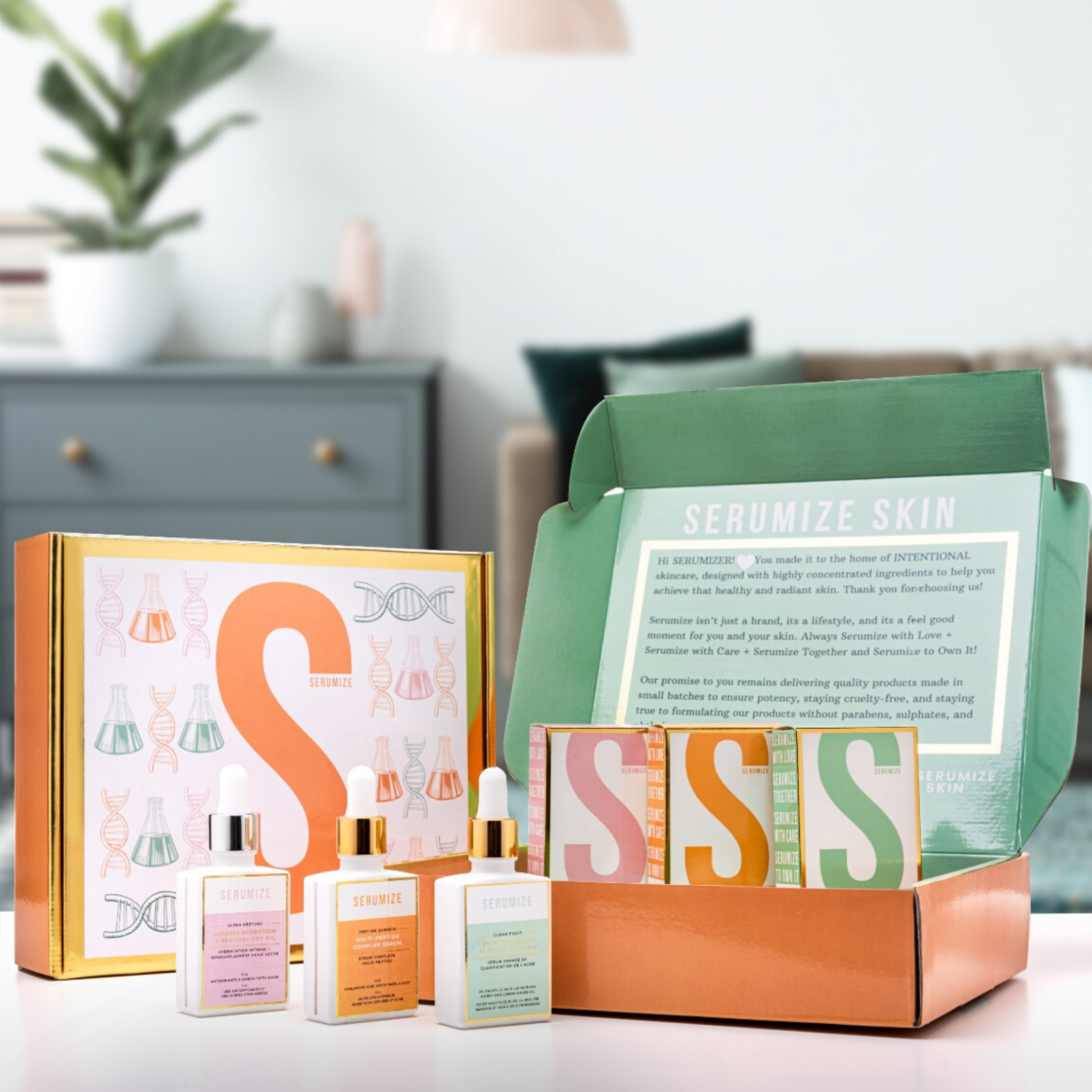
When we developed the Ultra Restore Oil and Clear Fight Serum, the absence of fragrance was a structural decision, not a marketing one. Leave-on products with daily application are where cumulative exposure risk is most clinically significant. Removing fragrance from this category eliminates a sensitisation variable before it can accumulate.
The Ultra Restore Oil works by delivering lipid-phase actives to the intercellular matrix without disrupting epidermal function, which fragrance compounds are known to do by increasing transepidermal water loss and altering tight junction proteins. The Clear Fight Serum addresses active blemish cycles without the inflammatory compounding that fragrance-triggered sensitisation creates.
Both formulas are built around what skin needs biochemically, not what consumers expect cosmetically. No fragrance. No performance compromise.
How do I know if my skincare actually has fragrance in it?
This is the question we get most often, word for word. The ingredient list is your starting point, but knowing what to look for requires a short vocabulary.
Watch for these terms on any leave-on product:
- Parfum / Fragrance: Catch-all term. Anything can be inside it.
- Linalool, Limonene, Geraniol, Eugenol, Citral: Naturally occurring fragrance allergens now requiring EU disclosure.
- Benzyl alcohol (in fragrance context): Common fixative in fragrance blends; distinct from benzyl alcohol used as a preservative.
- Oakmoss extract / Treemoss extract: Potent contact allergens; restricted under EU Regulation 2023/1545.
- Essential oils (any named botanical): Contain multiple fragrance allergens regardless of how the oil is sourced.
If you came to this article because something in your routine isn’t working, and no one has been able to tell you why, fragrance is where we’d start looking.
Every SERUMIZE formula is fragrance-free by design. Not as a positioning statement. Because the skin performs better without it.
→ Build Your Routine See the Formula Find Your RoutineClinical References
- Uter, W., et al. (2019). ‘Patch test results with the European baseline series and additions for the years 2013–2014 to 2015–2016.’ Contact Dermatitis, 80(2), 94–105. [Fragrance mixes identified among top sensitisers in European patch-test populations]
- Buckley, D.A. (2007). ‘Fragrance as an occupational and cosmetic dermatitis risk.’ Occupational Medicine, 57(3), 169–176. [Fragrance identified as leading cause of occupational and cosmetic contact dermatitis]
- Schalock, P.C., et al. (2013). ‘Fragrance: The most common sensitiser in leave-on cosmetics.’ Journal of the American Academy of Dermatology, 69(4), 625–631. [Fragrance ranked as top allergen in leave-on product categories including serums and facial oils]
- European Commission. (2023). Commission Regulation (EU) 2023/1545 amending Annexes II, III and V to Regulation (EC) No 1223/2009 as regards certain substances used in cosmetic products. [Expanded list of 82 fragrance allergens requiring individual label disclosure]
- Lyndgaard, L.B., & Menné, T. (2011). ‘Exposure to essential oils and risk of sensitisation.’ Acta Dermato-Venereologica, 91(2), 148–154. [Demonstrated that naturally derived fragrance compounds including linalool and limonene are equivalent allergen risks to synthetic compounds]
- International Fragrance Association (IFRA). IFRA Standards Library. [Maintains the registry of 3,000+ approved fragrance ingredients used in global cosmetic formulation]
- Johansen, J.D. (2003). ‘Fragrance contact allergy: a clinical review.’ American Journal of Clinical Dermatology, 4(11), 789–798. [Comprehensive review of fragrance allergen mechanisms including cumulative sensitisation patterns]
- de Groot, A.C., & Frosch, P.J. (1997). ‘Adverse reactions to fragrances: a clinical review.’ Contact Dermatitis, 36(2), 57–86. [Foundational review establishing the skin barrier disruption mechanisms of fragrance compounds in leave-on preparations]
SERUMIZE | Clinical Skincare | serumize.com