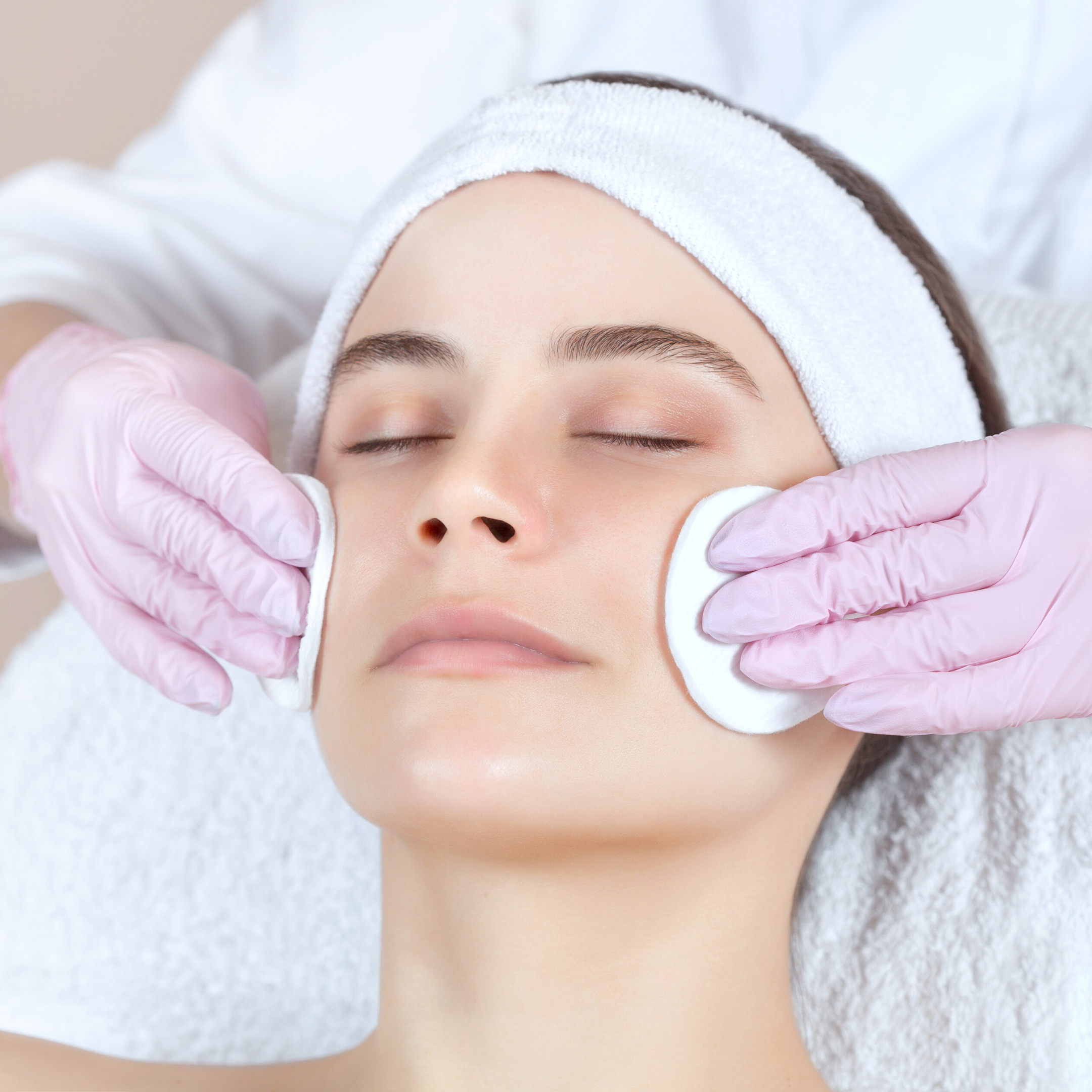
Your skin looks flat in every photo. Grey under office lighting. No highlighter fixes it, and you've already reached for a heavier moisturizer. It didn't work, and it was never going to. Dullness isn't a moisture problem. It's a cell turnover problem, and once you understand what's actually happening at the surface of your skin, the fix stops being a guessing game.
QUICK ANSWER
Dull skin happens when dead corneocytes build up faster than they shed, scattering light instead of reflecting it. Oxidative stress from UV and pollution compounds this by damaging cells before they resurface. Fix: accelerate turnover with an exfoliating acid, then protect new cells with antioxidants.

Why Does My Skin Look Dull?
Healthy facial skin renews itself roughly every twenty-eight days — new cells rise from the basal layer, flatten, and shed continuously. That cycle slows with age, sun exposure, and stress, and dead cells linger longer than they should. Light hits that uneven surface and scatters instead of reflecting evenly, which reads as grey or flat. We see this constantly: someone switches serums three times, changes nothing about turnover, and the dullness never lifts.
The Second Cause: Oxidative Stress
Turnover slows for a mechanical reason. Dullness also has a chemical one. UV and pollution generate free radicals that damage keratinocytes before they reach the surface, so the cells arriving at the top are already compromised. Research on stabilized vitamin C, E, and ferulic acid found measurably reduced UV-driven cellular damage within days. Damaged cells can't reflect light the way healthy ones do.
On a small screen, swipe across the table to read every column.
| What You've Tried | Why It Doesn't Fix Dullness |
|---|---|
| A heavier moisturizer | Hydrates the surface but doesn't remove the dead-cell layer scattering light |
| More sleep and water | Supports overall skin health — doesn't accelerate cell turnover |
| A brightening-only serum | Evens visible tone but doesn't clear buildup or shield new cells from damage |

The Routine That Brings Back Your Glow
Two mechanisms move the needle: clearing the dead-cell layer and protecting what's underneath. We formulate Clear Fight Serum around exfoliating acids that loosen the bonds between corneocytes, speeding shedding without the scrubbing that leaves skin raw. Follow with Ultra Restore Oil, vitamin E, and plant-derived antioxidants that shield newly surfaced cells from the damage that dulled the last batch. With consistent use, most people notice a visible shift within two to three weeks.

Why Is My Skin So Dull And Tired-Looking No Matter What I Do?
This is the question we hear most, usually from someone who's already spent months chasing brightness with the wrong tools. If your routine leans heavily on hydration and light on exfoliation and antioxidants, this is why. Skin can be perfectly moisturized and still look tired, because moisture was never the variable controlling how much light it reflects.
You didn't imagine the dullness, and reaching for moisturizer first was a reasonable guess. The actual fix is built around the two mechanisms responsible: turnover and protection. If your skin still looks flat by evening, that's where to look next.
Sources
- Iizuka, H. et al. Physiological analysis of facial skin by corneocyte morphology and stratum corneum turnover. PubMed. Found that facial skin renews roughly twice as fast as skin on the forearm, which is part of why facial exfoliation shows results faster than body exfoliation.
- Lin, J.Y. et al. A topical antioxidant solution containing vitamins C and E stabilized by ferulic acid provides protection for human skin against UV damage. Journal of the American Academy of Dermatology. Found that this stabilized antioxidant combination measurably reduced UV-induced cellular damage in human skin within days of topical use.
- Al-Niaimi, F. & Chiang, N.Y.Z. Topical Vitamin C and the Skin: Mechanisms of Action and Clinical Applications. Journal of Clinical and Aesthetic Dermatology. Explains how vitamin C neutralizes oxidative stress through electron donation and supports collagen synthesis and tone.
- Clinical effects of an oral supplement rich in antioxidants on skin radiance in women. Clinical, Cosmetic and Investigational Dermatology (Dove Medical Press). An 8-week trial in women with dull complexions found measurable improvements in skin color, facial luminosity, and firmness after antioxidant supplementation.
- Topical AHA in Dermatology: Formulations, Mechanisms of Action, Efficacy, and Future Perspectives. Cosmetics (MDPI). Reviews how alpha-hydroxy acids loosen the bonds between corneocytes, speeding cell shedding and revealing smoother, more even texture.
- Formulating Glycolic Acid: Balancing Penetration, Irritation, and Therapeutic Outcomes in Dermatology. Cosmetics (MDPI). Details how glycolic acid's small molecular size and formulation pH determine how effectively it reaches and loosens the stratum corneum.
- American Academy of Dermatology Association. Patient guidance on skin cell turnover and exfoliation. Confirms exfoliation as a clinically supported approach for addressing the buildup of dead surface cells that contributes to a dull appearance.